Every year, hundreds of pinnipeds, cetaceans, and sea otters wash ashore suffering from vessel strikes, entanglement in commercial fishing gear, biotoxin poisoning, or severe malnutrition. Behind every successful rescue stands a multidisciplinary team operating under extreme time pressure. Modern rehabilitation protocols for rescued marine mammals are no longer built on improvisation; they represent a rigorous, evidence-based discipline merging veterinary medicine, behavioral biology, and advanced aquatic engineering. The ultimate objective remains demanding yet precise: transition a traumatized, fragile wild animal back into a resilient, self-sufficient member of the ocean ecosystem.
The Critical Window: Triage and Initial Intake Assessment
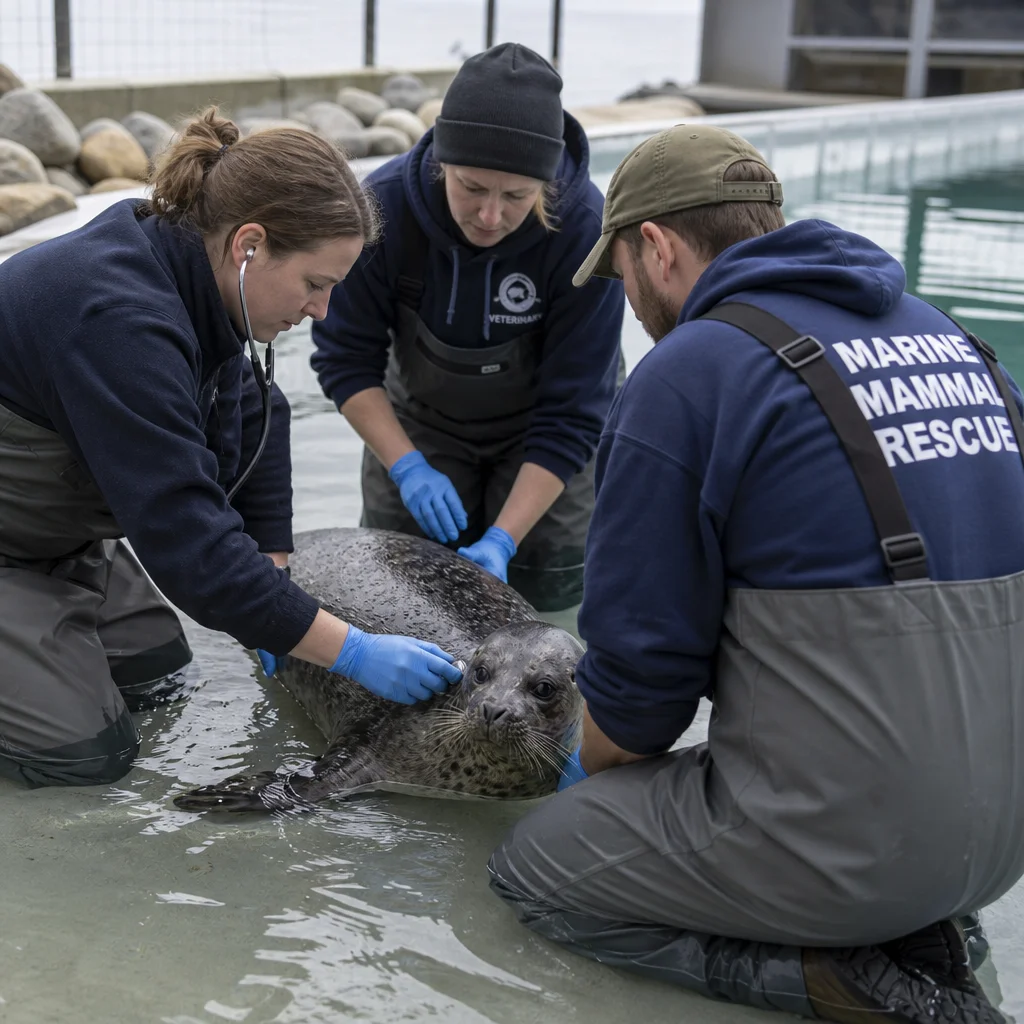
The first forty-eight hours dictate the trajectory of a rehabilitation case. Stranded marine mammals routinely arrive in deep physiological shock, hypothermic or hyperthermic, severely dehydrated, and hypoglycemic. Well-meaning beachgoers often exacerbate this stress by crowding, touching, or attempting to push the animal back into the surf—actions that frequently prove fatal. Trained first responders immediately establish a wide perimeter, erect sunshades, apply wet towels to regulate body temperature, and minimize acoustic and visual disturbances.
Upon arrival at the facility, the patient undergoes a standardized, rapid intake assessment:
- Accurate species, sex, and age-class determination.
- Standardized body condition scoring (BCS) and precise weight acquisition.
- Evaluation of respiratory rate, effort, and lung sounds.
- Comprehensive examination of ocular, oral, and integumentary health, noting net marks, shark bites, or oil fouling.
- Immediate blood draws for baseline hematology and serum chemistry panels, alongside parasitology and microbiology screenings.
This phase also demands clinical realism. Animals presenting with catastrophic trauma, untreatable congenital abnormalities, or terminal systemic illness require immediate, humane euthanasia. Established triage protocols ensure these difficult determinations rely on objective medical criteria rather than emotional impulse.
Advanced Veterinary Stabilization and Diagnostics
Treating marine mammals differs fundamentally from companion animal practice. These species have evolved profound physiological adaptations to diving, meaning their autonomic nervous systems react adversely to handling stress, occasionally triggering capture myopathy or cardiac arrest. Consequently, sedation and anesthesia protocols must be conservative, highly species-specific, and paired with continuous capnography and pulse oximetry.
Fluid therapy is critical for correcting electrolyte imbalances and dehydration. Clinicians typically administer warmed, isotonic fluids via subcutaneous or intravenous routes, supplemented with dextrose for hypoglycemic neonates. Diagnostic workups leverage portable digital radiography for assessing skeletal fractures and aspiration pneumonia, high-resolution ultrasound for visceral evaluation, and point-of-care blood gas analyzers to monitor acid-base status in real time. Proactive pain management is integrated into initial orders, as targeted analgesia demonstrably improves appetite, resting behavior, and immune competency.
Nutritional Engineering and Feeding Protocols
Dietary management requires strict physiological pacing. Emaciated patients are highly susceptible to refeeding syndrome—a fatal metabolic shift if calories are introduced too aggressively. Neonatal cetaceans and pinnipeds begin on specialized species-specific milk replacers or fortified fish gruels delivered via gastric intubation, slowly transitioning to whole, high-quality fish as gastrointestinal motility normalizes.
Dietary logistics demand rigorous quality control:
- Prey items (such as herring, capelin, and squid) are inspected, weighed, and thawed under strict sanitary conditions.
- Thiamine (Vitamin B1) supplementation is mandatory to prevent deficiency-induced neurological degradation caused by thiaminase-rich fish species.
- Daily logs track exact consumption volumes, fecal consistency, and hydration indicators, enabling nutritionists to incrementally adjust caloric density.
Life Support Systems: Housing, Water Quality, and Biosecurity
Facility infrastructure must mimic natural environments while maintaining hospital-grade hygiene. Patients transition from climate-controlled dry holding bays—essential for resting severely compromised pinnipeds—to specialized rehabilitation pools that facilitate aquatic therapy, thermoregulation, and skin integrity.
Water quality parameters dictate clinical success. Systems employ continuous filtration, protein skimming, and UV sterilization, with automated monitoring of temperature, salinity, pH, turbidity, and residual disinfectants (chlorine or ozone). Elevated bacterial loads in water columns rapidly cause devastating secondary keratitis and dermatitis in compromised seals. Furthermore, enclosure design incorporates slip-resistant haul-out ramps, variable water depths, and opaque acoustic barriers to mitigate chronic stress and prevent human imprinting.
Behavioral Integrity and Habituation Prevention
Marine mammals possess high cognitive capacity, making them exceptionally vulnerable to human habituation. An animal that associates humans or vessels with food sources cannot be released, as it faces near-certain mortality or dangerous human-wildlife conflict in the wild.
To counteract this, facilities enforce strict non-fraternity rules:
- Caregivers wear identical, neutral-colored rain gear and opaque face shields to obscure human facial features.
- Feeding is conducted remotely via chutes or blind ports, eliminating visual pairing of humans with sustenance.
- Acoustic enrichment is suppressed, and environmental enrichment relies on novel physical structures, varying currents, and puzzle feeders that stimulate natural foraging and predatory drives rather than social interaction.
Behavioral psychologists continuously monitor dive profiles, social dynamics, obstacle avoidance, and fear responses. Recovery of physical health without the restoration of wild-type wariness results in permanent non-release status.
Objective Release Criteria and Telemetric Post-Release Monitoring
Returning an animal to the wild is an ecological decision governed by strict multi-agency permits. Before an animal is cleared, it must satisfy four distinct gates:
- Complete resolution of primary pathologies and surgical wounds, verified by clear blood panels and imaging.
- Self-sustaining acquisition of live, natural prey within a pool setting, coupled with stable or increasing body mass.
- Demonstration of complete species-typical behavioral repertoires, including appropriate predator avoidance and fear of humans.
- Identification of an ecologically sound release location featuring adequate prey densities, optimal seasonal water temperatures, and minimal anthropogenic disturbance.
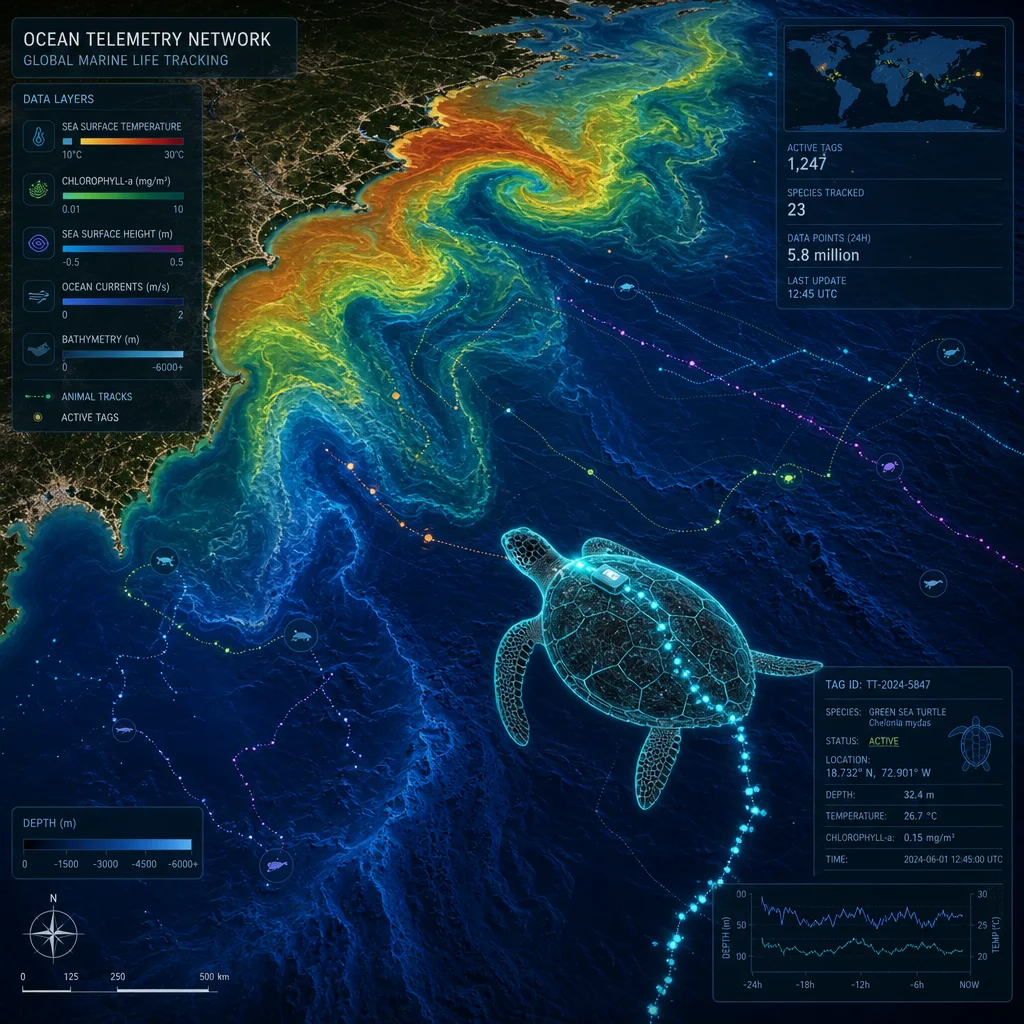
Modern protocols mandate post-release monitoring. Utilizing VHF, satellite-linked telemetry tags, or photo-identification catalogues, marine biologists track post-release survival, migratory pathways, and foraging success. These longitudinal datasets provide the empirical validation required to continually refine clinical and husbandry protocols across the global rescue community.
Persistent Structural Challenges in Marine Mammal Rehabilitation
Despite significant advancements, the sector faces profound systemic bottlenecks. Financial sustainability remains precarious; caring for a single stranded cetacean calf requires capital expenditures and round-the-clock staffing equivalent to supporting dozens of pinnipeds. Regulatory hurdles—such as complex permitting processes and interstate or international transport restrictions—frequently introduce administrative delays that jeopardize patient stabilization windows.
Environmental and epidemiological pressures are escalating. Climate change alters ocean currents, driving novel marine heatwaves, harmful algal blooms (such as domoic acid events), and shifts in prey availability that cause mass stranding waves. Simultaneously, emerging infectious diseases like avian influenza strains crossing over into marine mammals threaten both captive collections and wild populations, requiring stringent biosecurity protocols that challenge the operational capacity of smaller rescue organizations.
Milestones and Successes Defining Modern Practice
The evolution of marine mammal medicine over the past three decades is a conservation triumph. Enhanced neonatal intensive care units, refined protocols for oiled wildlife decontamination, and point-of-care diagnostics have dramatically elevated post-rescue survival rates. Today, premier facilities routinely release the majority of admitted seals and sea lions back into thriving wild populations.
Collaboration has been the cornerstone of this progress. Standardized data-sharing networks, multinational veterinary symposia, and open-source rehabilitation manuals ensure that a breakthrough at one facility instantly benefits global operations. Beyond direct animal rescue, these organizations serve as vital sentinels for ocean health, leveraging public outreach to build grassroots support for marine protected areas, sustainable fisheries, and ship-strike mitigation policies.
The Future Horizon of Marine Mammal Medicine
Looking ahead, marine mammal rehabilitation is shifting toward predictive, data-driven medicine. Machine learning algorithms analyzing historical intake metrics are beginning to forecast survival probabilities upon admission, allowing clinicians to optimize resource allocation instantly. Innovations in telemetric tag miniaturization, targeted probiotic supplementation for gut microbiome restoration, and non-invasive diagnostic biomarkers will continue to compress recovery timelines.
For the public, encountering a stranded marine mammal demands disciplined restraint: maintain a wide distance, keep dogs on leashes, provide shade, refrain from wetting the blowhole or forcing the animal back into heavy surf, and immediately contact authorized stranding networks. Marine mammal rehabilitation succeeds when the continuum from beach rescue to clinical stabilization and ocean release remains professional, scientifically rigorous, and swift. The impressive successes achieved thus far prove the value of this work, setting a high standard for ocean stewardship in the decades to come.
“