Stand on the deck of a ship in the open Pacific and the world appears to be a place of near silence, broken only by wind and water against the hull. Lower a hydrophone below the surface, however, and that illusion shatters completely. The global ocean is one of the loudest environments on Earth, and for the marine mammals that inhabit it, sound is not mere background ambiance but vital information: a spatial map, an early warning system, and a continuous channel of social communication. For whales, dolphins, and porpoises, the ability to interpret this acoustic channel dictates where they forage, how they maintain pod cohesion, and how they navigate across entire ocean basins during migrations spanning up to 10,000 kilometres. This foundational reality explains why the exponential rise of human-made noise at sea has evolved into one of the most pressing, heavily monitored crises in contemporary marine conservation and bioacoustics.
The Acoustic World of Whales and Dolphins
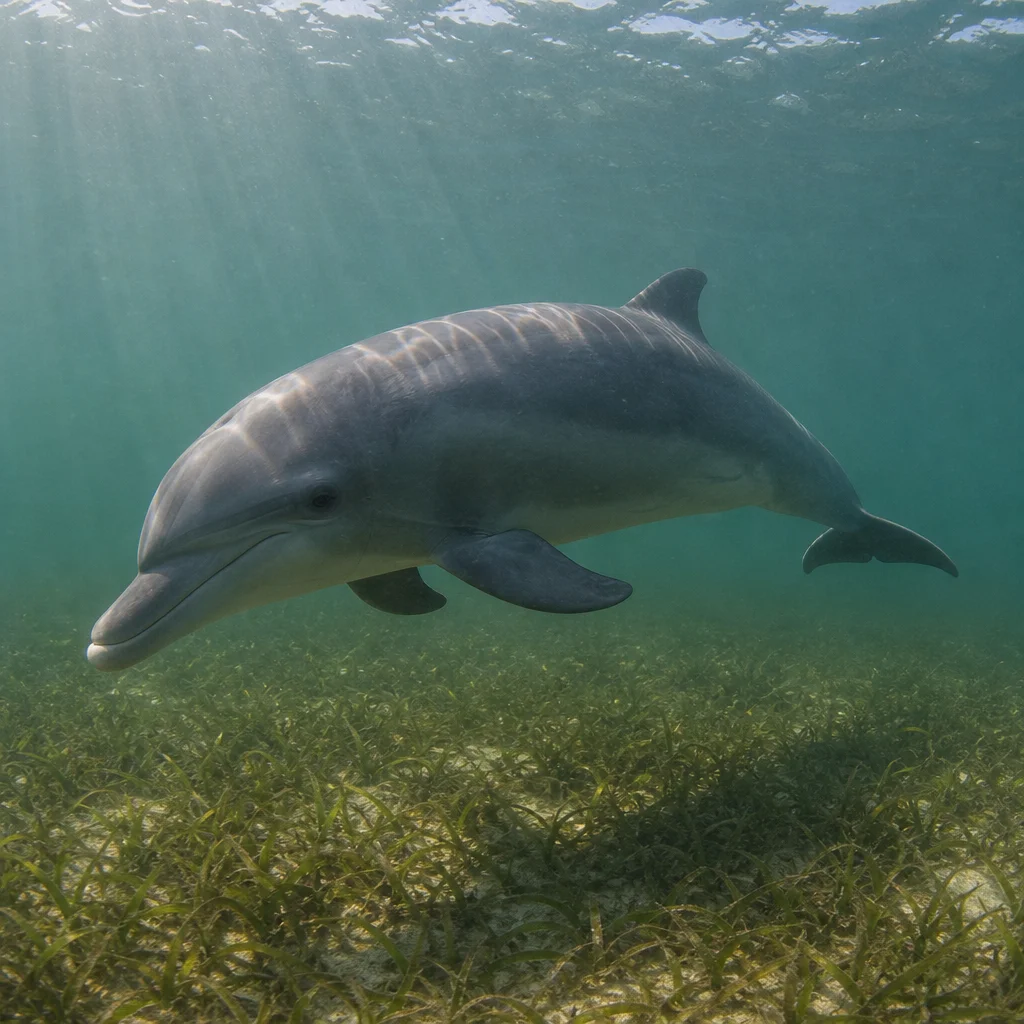
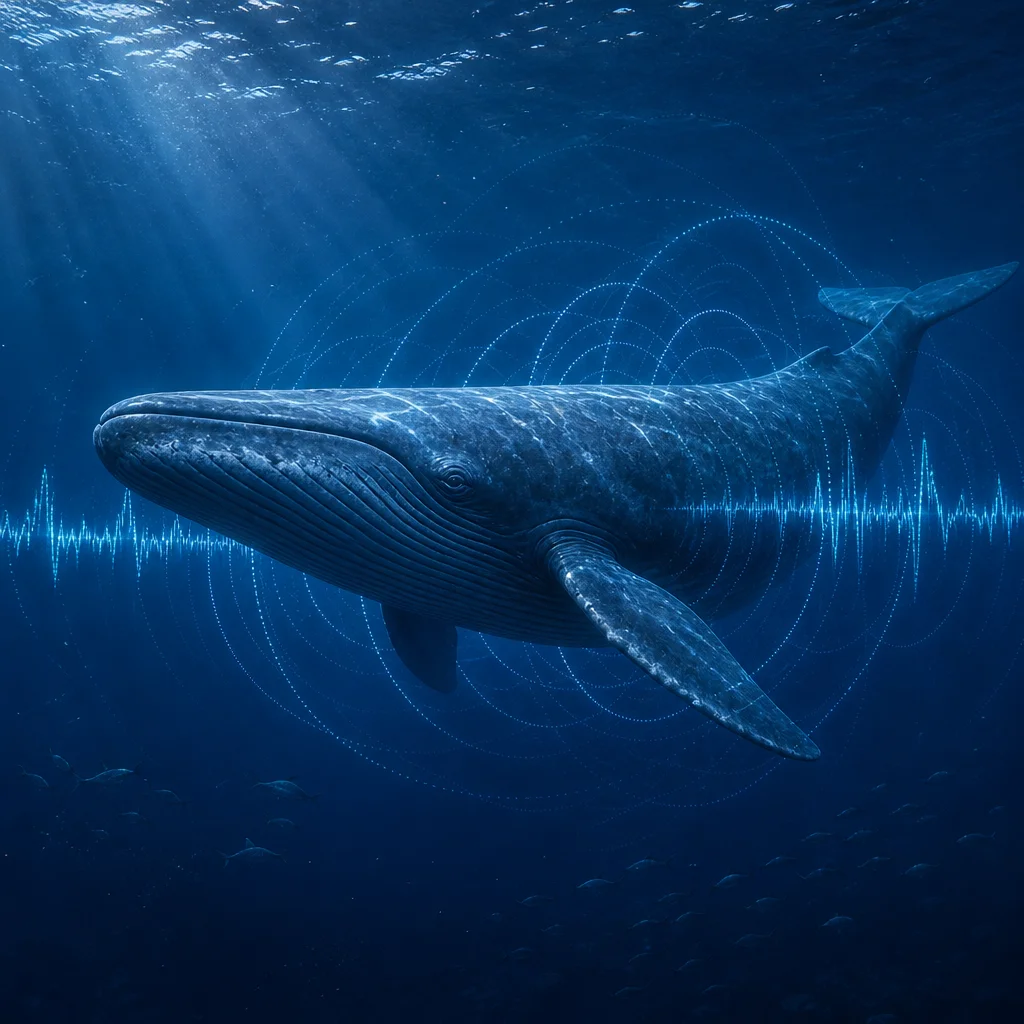
Cetaceans are categorized broadly into two primary acoustic guilds, each adapted to specific frequency ranges and survival strategies. Baleen whales—including blue, fin, humpback, right, and bowhead whales—produce powerful low-frequency calls, mostly concentrated between 10 and 300 hertz. These frequencies are expertly adapted to propagate enormous distances through the deep sound channel, a unique ocean layer where temperature and pressure gradients refract sound waves so they lose minimal energy over vast expanses. A single fin whale vocalization can theoretically reach a conspecific hundreds of kilometres away across open water. Conversely, toothed whales—such as sperm whales, beaked whales, dolphins, and porpoises—rely predominantly on high-frequency echolocation, emitting rapid bursts of broadband clicks and interpreting the returning echoes to construct high-resolution mental maps of their surroundings, even detecting prey items smaller than a human hand in pitch-black waters.
Both survival strategies rely on a singular, fragile precondition: a sufficiently quiet acoustic background. Furthermore, cetaceans utilize sound extensively for social bonding and coordination. Humpback mothers and calves exchange low-amplitude contact calls, dynamic dolphin pods communicate using distinct signature whistles, and resident sperm whale clans share specialized acoustic codas that signal group identity and lineage. Bioacoustic recordings of migrating humpbacks off the Australian and Hawaiian coasts demonstrate that these animals maintain a continuous acoustic dialogue while travelling, actively modulating their call rates depending on the surrounding sea state and the proximity of neighboring pods.
The Modern Acoustic Landscape
Commercial shipping is the primary driver of continuous, pervasive noise pollution across the global ocean. Cavitation generated by high-speed ship propellers and mechanical engine vibrations produce heavy broadband noise concentrated primarily below 200 hertz—precisely the frequency band baleen whales exploit for long-range communication. A single mega-container ship can radiate peak source levels reaching approximately 190 decibels, and the commercial shipping fleet now exceeds 100,000 active vessels worldwide. Marine scientists comparing modern hydrophone recordings with historical archives from the 1950s and 1960s document a staggering increase of roughly 10 to 15 decibels in low-frequency ambient noise across major maritime trade routes. In acoustic terms, this escalation means the effective communication range of a blue or fin whale in these waters has shrunk by a devastating factor of ten.
Maritime transport, however, represents only one facet of the anthropogenic soundscape. Industrial seismic surveys utilized in oil and gas exploration fire massive airgun arrays into the water column every 10 to 15 seconds for weeks on end, producing high-intensity impulsive sounds capable of penetrating deep beneath the seafloor. Meanwhile, naval mid-frequency tactical sonar—typically operating between three and four kilohertz to track stealthy submarines—is a well-documented catalyst for acute physiological trauma and mass strandings in sensitive deep-diving cetaceans. Offshore wind farm construction further exacerbates the crisis by driving massive steel monopiles into the seabed with hydraulic hammers, generating some of the loudest impulsive signals ever recorded in the marine environment. Combined with widespread coastal dredging, recreational watercraft, commercial fishing engines, and polar icebreakers, these industrial stressors create a fractured, layered soundscape where the natural acoustic horizon is increasingly obliterated.
Acoustic Masking: When Vital Signals Disappear
The most widespread ecological consequence of chronic ocean noise is not immediate physical injury, but acoustic masking. Masking occurs when an unwanted anthropogenic sound elevates the detection threshold for biologically critical signals, meaning a whale call normally audible across a 300-kilometre radius becomes completely imperceptible beyond a mere thirty kilometres. Landmark studies focusing on North Atlantic right whales and blue whales have quantified this alarming compression: a century ago, a blue whale vocalization could easily span an entire ocean basin, whereas in today’s heavily trafficked North Atlantic, the functional communication space of the exact same call has contracted by as much as 90 percent during peak shipping seasons. For an apex marine mammal whose primary long-range sensory modality is hearing, this ecological compression is equivalent to watching a vast navigational map shrink down to a few desolate square kilometres.
Masking forces immediate, measurable shifts in behavioral patterns. Humpback whales inhabiting chronically noisy waters have been documented systematically shifting their song frequencies upward and shortening phrase lengths—a direct acoustic parallel to humans shouting over a crowded room. Similarly, North Atlantic right whales call significantly louder in high-noise environments, an energy-expensive strategy with strict physiological limits. Harbour porpoises, whose high-frequency echolocation clicks heavily overlap with small vessel engine frequencies, frequently interrupt or abandon active foraging bouts when fast boats approach, with behavioral suppression persisting for hours after the vessel has cleared the area.
Behavioural Responses: Avoidance, Silence and Detours
Cetacean reactions to severe acoustic disturbance follow a distinct gradient depending on the intensity, duration, and predictability of the sound source. Mild noise often triggers a momentary startle response or a brief pause in feeding behavior. Conversely, stronger or persistent acoustic stimuli provoke intense behavioral avoidance: humpback pods routinely detour around active seismic exploration vessels, bowhead whales deviate tens of kilometres off their traditional migratory tracks to bypass airgun arrays, and beaked whales—widely recognized as the most sonar-sensitive mammalian family—go completely silent and rapidly flee mid-frequency active sonar sources. In the most severe cases of chronic disturbance, animals abandon preferred, nutrient-rich habitats altogether. High-resolution telemetry tagging studies conducted off southern California revealed that blue whales exposed to dense cargo traffic reduced deep feeding dives and abandoned prime foraging grounds, while long-term acoustic monitoring programs in the same region recorded a sharp drop in blue whale call detections on days characterized by elevated low-frequency noise.
Importantly, behavioral avoidance comes with a heavy energetic price tag. Detouring around a noisy maritime bottleneck adds unnecessary miles to an arduous migration. For a baleen whale that has spent the short polar summer gorging on krill to build up critical blubber reserves, the annual energy budget is meticulously balanced. Interrupted foraging, displaced feeding grounds, and extended travel times all draw directly from the finite lipid reserves that must simultaneously fuel gestation, lactation, and the grueling return journey.
Acute Harm: Sonar, Strandings and Beaked Whales
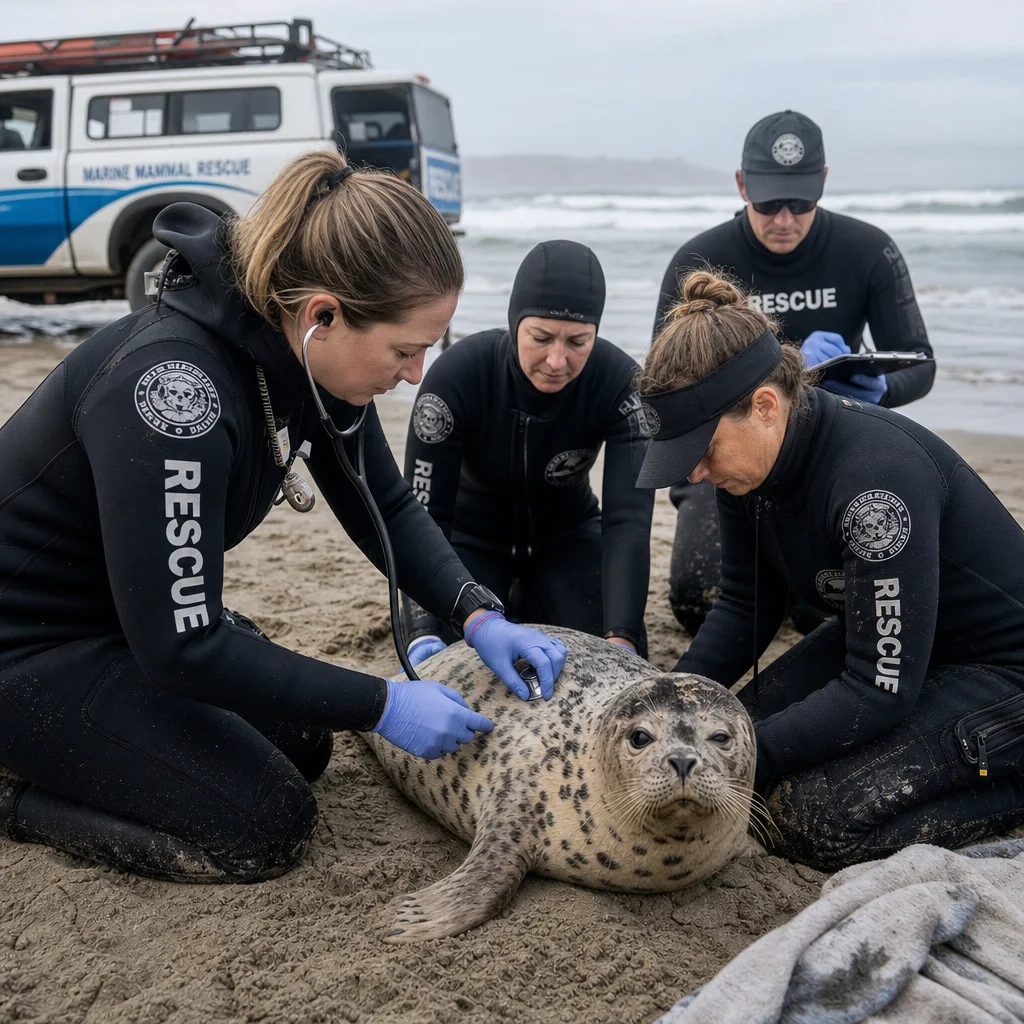
The most irrefutable and dramatic evidence linking anthropogenic noise directly to cetacean mortality stems from atypical mass strandings of deep-diving beaked whales coinciding precisely with naval anti-submarine exercises. Tragic events in the Bahamas (2000), the Canary Islands on multiple occasions, and across parts of the Mediterranean involved numerous Cuvier’s and Blainville’s beaked whales stranding ashore within hours of high-intensity sonar transmissions. Comprehensive veterinary necropsies revealed severe cerebral hemorrhaging and nitrogen gas-bubble embolisms consistent with decompression sickness—commonly known as “the bends.” This pivotal discovery completely transformed scientific consensus, proving that these deep-diving specialists panic in response to sonar pulses, abandon their sophisticated physiological dive controls, and ascend to the surface far too rapidly. Other vulnerable species, including pilot whales and various dolphin populations, suffer similar physiological trauma during intense acoustic operations, though the precise pathogenic pathways remain under ongoing scientific investigation.
Migration, Energy Budgets and Reproduction
Migration is the critical biological phase where acoustic disturbance compounds exponentially. Humpback, grey, blue, and right whales travel along ancient migratory corridors that frequently intersect directly with coastal waters serving as the busiest shipping lanes on Earth. Strategic maritime chokepoints—such as the Santa Barbara Channel, the Strait of Gibraltar, and the Bering Strait—concentrate high densities of both migrating cetaceans and commercial vessels into narrow geographical funnels. This dangerous geographic overlap generates a compounding dual burden: severe acoustic masking and heightened ship-strike mortality risk occurring simultaneously in the exact same habitats. Furthermore, in the rapidly warming Arctic, retreating sea ice is opening historic navigation routes to commercial cargo traffic, exposing bowhead whales, belugas, and narwhals that evolved within a pristine, natural soundscape to relentless icebreaker and industrial tanker noise right on their primary summer feeding grounds.
The reproductive consequences of this relentless acoustic pressure, while harder to measure directly in wild populations, are biologically undeniable. Mothers travelling with dependent calves are exceptionally vulnerable; neonates swim considerably slower, fatigue rapidly, and nurse frequently. Chronic noise interruptions disrupt these critical nursing bouts, ultimately stunting calf growth and lowering weaning success. Furthermore, continuous acoustic stress chronically elevates circulating baseline glucocorticoids (stress hormones) in marine mammals, which over time suppresses immune function and undermines overall fecundity. Because cetaceans are long-lived, slow-reproducing K-selected species, even minor, incremental reductions in calf survival translate over decades into catastrophic declines at the population level.
Chronic Stress and an Accidental Experiment
One profound, unintended human intervention dramatically demonstrated the physiological link between shipping noise and chronic stress in cetaceans. In the immediate aftermath of the tragic terrorist attacks of September 11, 2001, commercial maritime shipping across the eastern seaboard of North America plummeted precipitously for several consecutive days. Marine biologists analyzing fecal hormone metabolites collected from North Atlantic right whales during this exact window discovered a remarkable, statistically significant drop in stress hormone levels compared to baseline data gathered in the years immediately preceding and following the event. A parallel natural experiment occurred two decades later during the global economic slowdowns of the early COVID-19 pandemic, when commercial traffic sharply declined in major international ports; underwater ambient noise dropped noticeably, and local cetacean populations exhibited observable shifts toward more natural communication ranges and behaviors. These unprecedented episodes represent the closest marine science has ever come to a large-scale, controlled ecological trial, providing definitive proof of the physiological toll exacted by maritime industry.
Mitigation That Actually Works
Fortunately, mitigating underwater noise pollution is entirely feasible using existing maritime engineering and operational frameworks. Because propeller cavitation is the dominant contributor to continuous vessel noise, relatively modest design and operational adjustments yield massive acoustic dividends. Slowing a large container ship down from 18 knots to 12 knots can reduce its radiated noise footprint by up to 75 percent; simultaneously, routine hull cleaning removes biofouling to restore hydrodynamic efficiency, while advanced propeller geometry and air-lubrication systems slash cavitation even further. From a spatial planning perspective, mandatory vessel routing schemes possess an exemplary track record: shifting commercial shipping lanes safely away from critical right-water feeding grounds in the Bay of Fundy and the maritime approaches to Boston successfully reduced both localized acoustic clutter and catastrophic ship-strike mortality.
For high-intensity impulsive sound sources such as seismic surveys and offshore construction, operational mitigation is straightforward when strictly enforced. Mandatory protocols include acoustic ramp-ups (“soft starts”) that gradually increase airgun energy over 20 minutes to allow nearby marine mammals to flee safely; dedicated marine mammal observers (MMOs) and active passive acoustic monitoring (PAM) systems equipped with automated real-time shutdowns when an animal enters a designated safety exclusion zone; and seasonal operational moratoriums during peak cetacean migration windows. Furthermore, offshore renewable energy developers are increasingly adopting quieter pile-installation technologies, such as heavy-duty bubble curtains and double-walled isolation casings that drastically dampen peak acoustic pulses. Advanced passive acoustic buoys and autonomous ocean gliders now utilize artificial intelligence to identify cetacean species-specific vocalizations in real time, instantly relaying automated warning alerts to nearby commercial vessels and survey crews.
Conclusion: Noise as a Form of Pollution
Cetacean navigation, foraging, and migration are extraordinary acoustic achievements. These highly evolved marine mammals do not simply travel across an indifferent, silent medium; they actively read the ocean’s acoustic architecture, relying entirely on the pristine subtlety and clarity of natural soundscapes. Every single decibel of anthropogenic noise injected into the low-frequency acoustic band erodes that vital biological signal. This silent ecological degradation is cumulative, largely invisible from the rolling deck of a surface vessel, and insidious enough to escape regulatory notice within the span of a human career. Treating underwater ocean noise with the exact same rigorous legislative expectations of measurement, statutory limitation, and strict enforcement historically applied to chemical and plastic pollution is the only logical, practical conclusion. The technological tools already exist, the empirical scientific evidence is overwhelming, and the economic costs of mitigation are entirely manageable. The only remaining question is whether global regulatory will and international cooperation will arrive before the ocean’s acoustic horizon becomes utterly unrecognizable to the magnificent marine species whose very survival depends upon it.
“