Why the Sea Still Speaks in Symbols
Long before marine biology established taxonomies and deep-sea submersibles mapped the abyssal plains, coastal communities mapped the ocean through narrative. A whale was never merely a migrating cetacea; it functioned as a tectonic platform, a localized deity, a navigational omen, or a maritime warning. A shark was not simply an apex cartilaginous fish with serrated teeth; it represented the literal boundary of the known universe. Ocean wildlife has always carried semiotic weight far exceeding biological reality, and those ancient archetypes have not vanished. Instead, they have evolved, migrating from temple friezes and sea shanties into corporate boardrooms, cinema screens, tattoo studios, and global conservation campaigns.
Folklore is far from primitive science. It serves as an evolutionary framework for communities to negotiate risk, fortune, kinship, and the unknowable abyss. Indigenous and coastal societies depended on the marine realm for sustenance, commerce, and survival, treating sea-dwellers as territorial neighbors endowed with intent and agency. Over centuries, those neighbors crystallized into enduring cultural archetypes. This exploration traces several of these marine inhabitants from ancient mythology to contemporary visual culture, examining how their symbolic resonance continues to shape our relationship with the natural world.
Whales: From World-Bearers to Gentle Giants
Across Pacific Islander traditions, the whale is frequently cast as a world-bearer. Certain Polynesian narratives describe a primordial whale offering its colossal dorsum as terra firma, creating a stable foundation for human habitation. Other regional lore positions whales as navigational guides leading outrigger canoes safely home, or as punitive forces against those who transgress ecological taboos. The constant denominator is scale: the whale exposes human insignificance, a humbling realization that cultures deliberately harnessed.
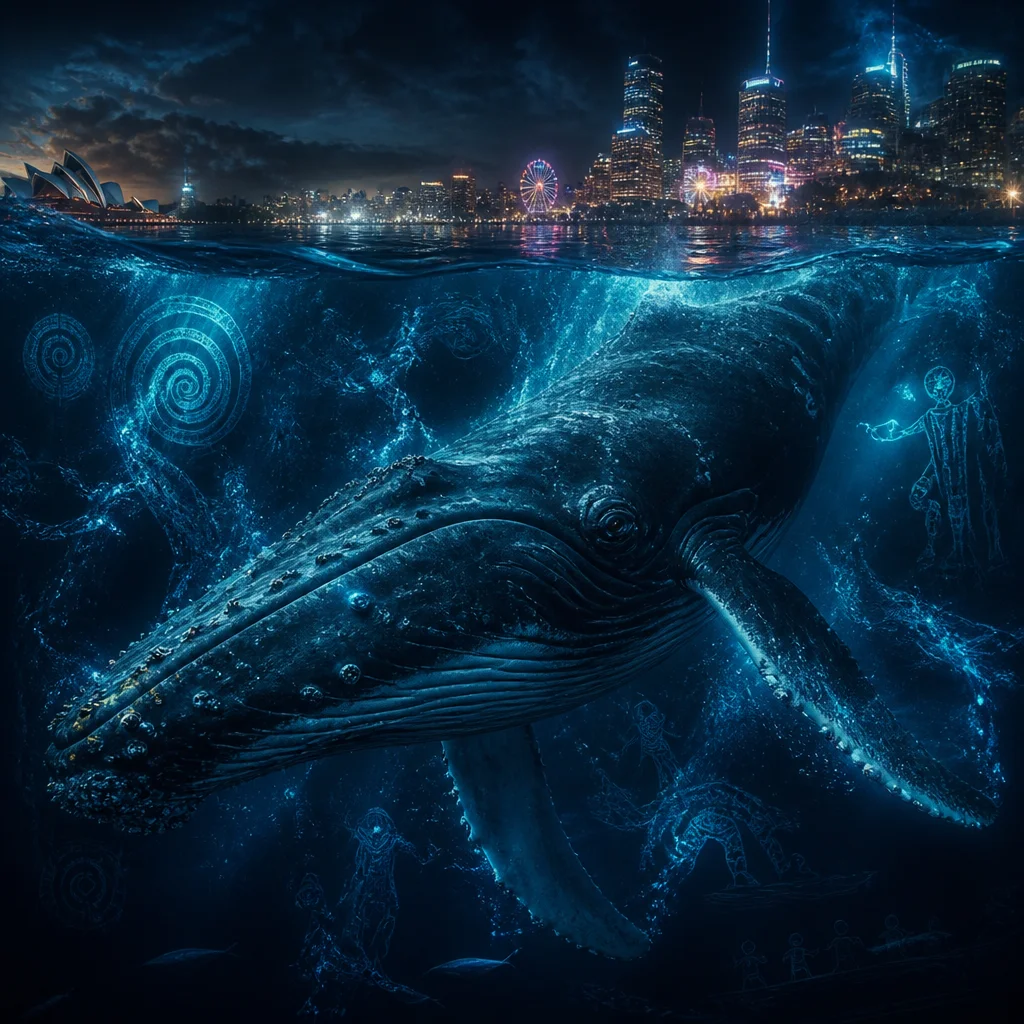
Conversely, European and North Atlantic maritime lore developed a darker semiotic lineage. Whales manifested as leviathans on medieval portolan charts, while tales of islands mistaken for dormant whales warned mariners against deceptive calms. Herman Melville elevated this existential anxiety into literary canon, transforming the white whale into an embodiment of destructive human obsession rather than pure malice. Contemporary imagery bridges these polarities. In children’s literature, cetaceans are rendered as gentle sentinels and guardians of coral biomes. In corporate branding, they project eco-friendly purity, depth, and quiet authority. Within climate discourse, whales have been reframed as critical ecological allies, since their biological pump mechanisms actively sequester atmospheric carbon.
The enduring vitality of the whale as a symbol lies in its radical duality: massive yet tranquil, physically supreme yet deeply vulnerable. Few zoological subjects embody majesty and fragility with such equilibrium, explaining why conservation organizations leverage their imagery so persistently.
Dolphins: Messengers, Guides, and Saviors
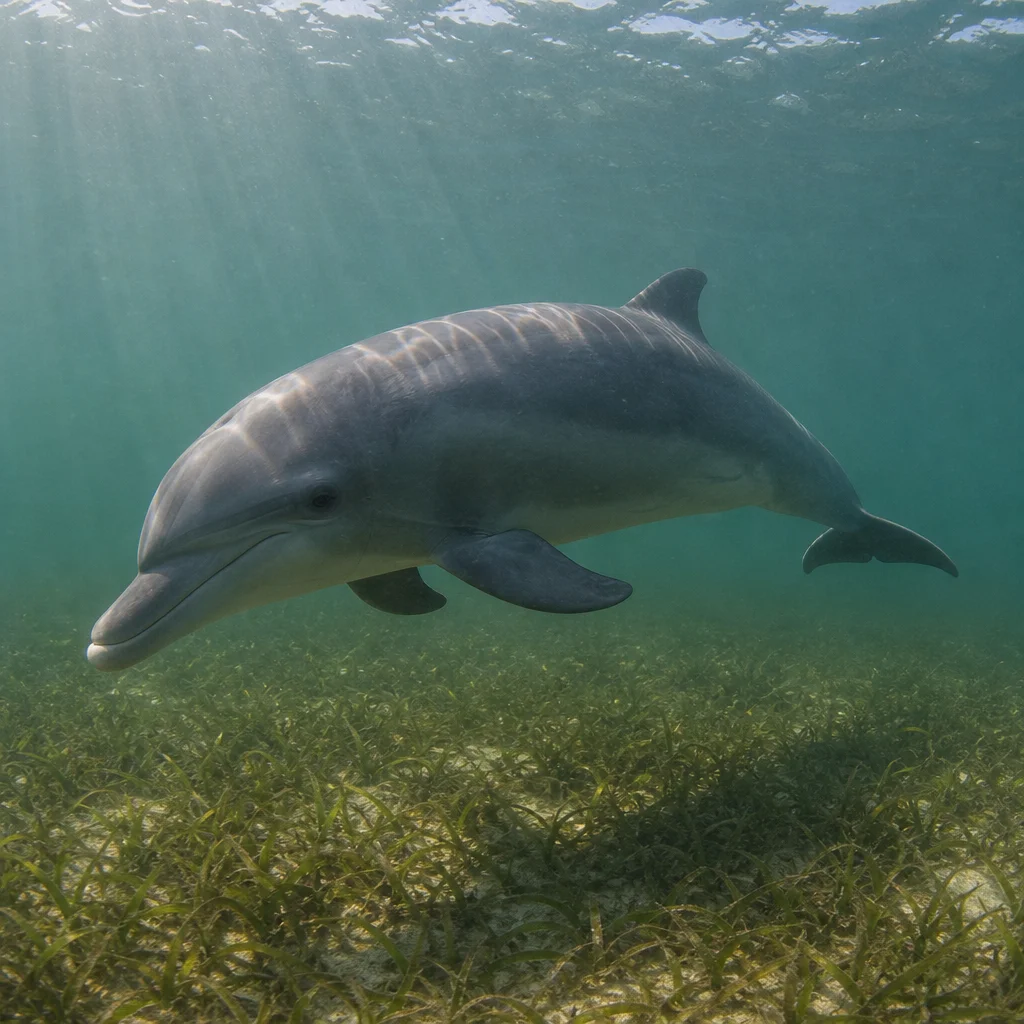
Dolphins largely escaped the demonic iconography of medieval sea monsters. Classical Greek writers documented them as benefactors of mariners, most famously immortalizing the myth of Arion, a musician carried ashore by a dolphin after being cast into the sea. This archetype has been reiterated across millenia until it feels like an intrinsic trait of cetacean psychology, despite essentially reflecting human psychological projections of rescue and divine grace.
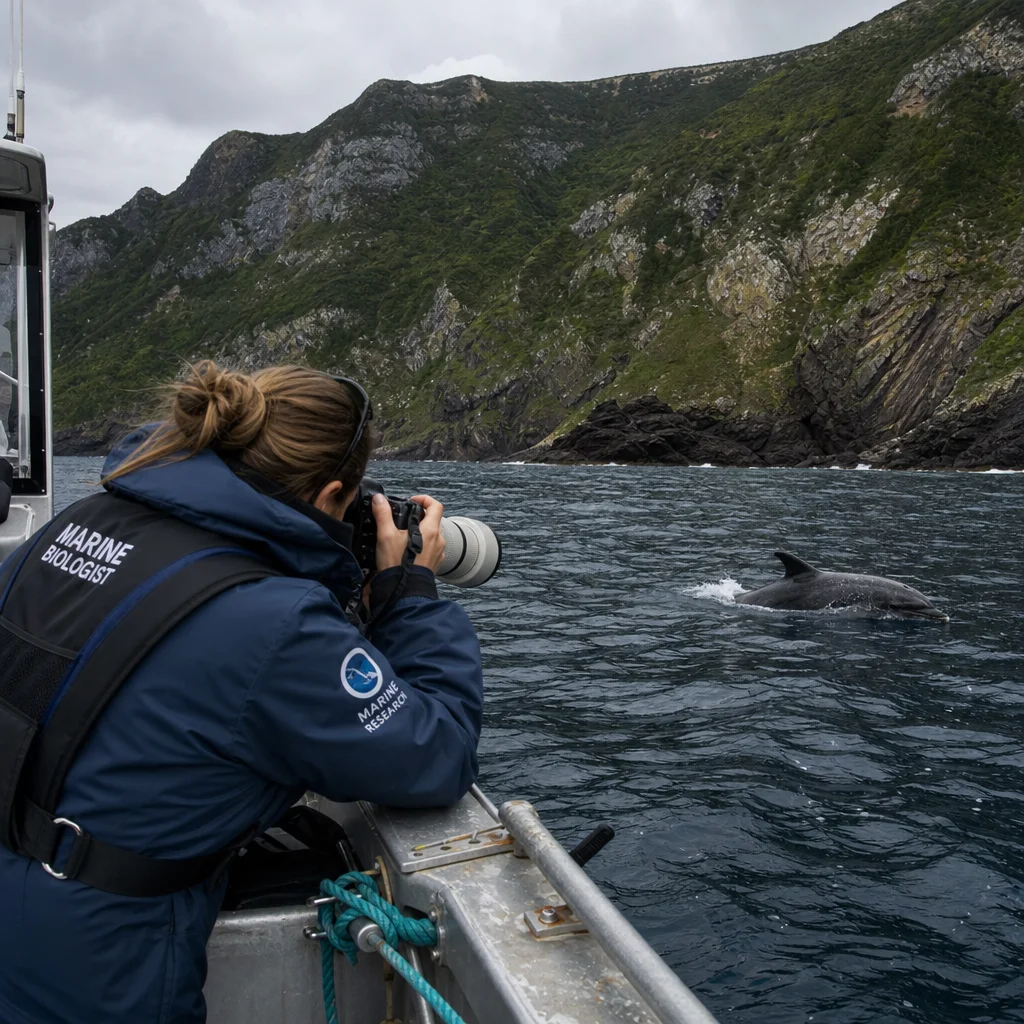
Polynesian and Amazonian cosmologies introduce alternative dimensions. In Amazonian folklore, the boto (pink river dolphin) manifests as a shape-shifting entity that transforms into a human at night, while Pacific traditions treat dolphins as ancestral relatives. Consequently, harming a dolphin carried domestic and tribal penalties rather than economic ones. This historical reverence generates contemporary friction: dolphins saturate eco-tourism marketing and family cinema, fostering unrealistic expectations among tourists who expect cooperative wild animals. When wild cetaceans exhibit unpredictable or aggressive behaviors, public disillusionment often follows.
Despite this commercial commodification, the dolphin remains one of our most potent symbols for non-human sentience. It allows humanity to conceptualize an intelligence shaped by hydrodynamic physics rather than terrestrial manipulation—an imagination valuable only if we decouple the real animal from its cinematic avatar.
Sharks: The Fear We Project Onto the Deep
Sharks inherited a symbolic mandate they never solicited: they became the universal proxy for primordial dread. In traditional Hawaiian and Fijian cosmologies, shark gods (Aumakua) guarded marine resources and acted as benevolent ancestral protectors. In Western maritime lore, sharks were empirical proof of the ocean’s predatory indifference. However, twentieth-century journalism and pulp fiction weaponized these accounts into a cultural panic that persists today.
This creates a profound semiotic dissonance. The biological reality reveals an ancient, cautious, and often selective predator; the cultural construct is a mindless feeding machine. Filmmakers capitalized on this artificial panic for decades. Only recently have marine documentaries begun reversing this damage, framing sharks as slow-growing, highly vulnerable architects of healthy marine food webs.
Rewriting a cultural symbol is an arduous, generational task. A single sensationalized news cycle can dismantle years of rigorous public outreach. Yet, the ongoing shift demonstrates that animal symbolism is entirely mutable, dictated not by intrinsic biology, but by the narrators and the frequency of their storytelling.
Sea Turtles: Patience, Longevity, and Safe Passage
Sea turtles embody the most tranquil semiotic space in marine iconography. Their extreme lifespans, deliberate locomotion, and transoceanic migrations make them natural emblems of endurance, resilience, and safe transit. In pan-Asian and indigenous American creation myths, a giant turtle supports the terrestrial plane upon its carapace. Polynesian wayfinding lore views the turtle as an accomplished navigator, and traditional tattoos frequently incorporate carapace geometries to denote a wearer’s ancestral bond with the ocean.
Modern visual culture retains these foundational attributes. Sea turtles feature prominently in hospitality branding, travel journalism, and resort aesthetics to signal pristine, unhurried environments. Environmental campaigns deploy them as flagship species because their life history is easily communicated: they nest on predictable sandy shores, return across decades, and their demographic collapse is visually verifiable.
The central hazard here is sentimental greenwashing. A resort logo featuring a sea turtle can project ecological responsibility while the adjacent coastline suffers from habitat degradation. Cultural symbols possess no internal audit mechanisms; that critical responsibility falls squarely on human observation.
Octopus, Squid, and the Intelligence of the Alien
Cephalopods serve as the ocean’s resident aliens, providing a framework for contemplating an intelligence entirely foreign to mammalian evolution. Edo-period Japanese woodblock prints assigned octopuses both comedic and menacing properties, while classical Mediterranean mosaics associated them with supreme adaptability and tactical dexterity. The colossal squid, meanwhile, inhabited the cartographic void of deep-sea unknowns.
Modern media embraces the octopus as a mirror for anxieties surrounding advanced artificial intelligence. With eight independent arms, three hearts, and sophisticated camouflage, the cephalopod is a living metaphor for decentralized complexity that resists human control. Technology enterprises borrow its neural anatomy for branding, while speculative fiction casts it as a cold, indifferent intellect. In reality, the common octopus is a shy, crepuscular forager spending most of its life in seclusion—proving that our monsters are frequently just vulnerable neighbors with superior chromatophores.
Seahorses, Starfish, and the Small Charms of the Tide
Marine symbolism is not exclusively titanic. Seahorses appear in historical decorative arts as emblems of delicate devotion, their unique reproductive biology—where males brood the offspring—serving as a quiet metaphor for shared domestic labor. Starfish (sea stars) convey a distinct message: regeneration. The capacity to regrow lost limbs transformed the echinoderm into a natural motif for healing, biological recovery, and wellness branding.
Micro-fauna also anchor practical folk taxonomies. Shells, sea urchins, and decapod crustaceans populate domestic talismans and maritime nursery rhymes as tokens of coastal abundance or frugality. These modest symbols rarely dominate global media, yet they illustrate how intimately everyday human language was forged by the shoreline.
Sailors’ Lore: Omens at the Rail
Between the fifteenth and nineteenth centuries, Western mariners constructed a rigorous semiotic ecosystem aboard sailing vessels. Mermaids, half-human and half-piscine hybrids, served as cautionary warnings regarding the psychological tension between domestic safety and the seductive horizon. The albatross, famously taboo to slaughter, materialized as a heavy metaphysical debt owed to nature. Dolphin sightings near the bow indicated favorable currents, whereas rats deserting a ship forecasted imminent structural failure or sinking. Flying fish denoted tropical latitudes, while a whale’s blow signaled that the voyage still held uncharted narratives.
Much of this lore functioned as empirical ecological knowledge disguised as superstition. Monitoring avian migration, surface currents, and marine mammal behavior preserved crews at sea. Encoding this data into narrative made it transmissible among illiterate crews. This symbolism was never mere decoration; it operated as a survival manual disguised as myth.
From Myth to Marketplace
Today, ocean fauna underpins modern commercial semiotics. Financial institutions deploy whales to communicate stability; insurance providers utilize sea turtles to signify protection; surfwear brands co-opt sharks for rebellious edge; tourism boards market dolphins as pure joy. None of these commercial choices are accidental or value-neutral. Each taps into centuries of accumulated cultural resonance and repurposes it onto a commercial placard.
While this borrowing can devolve into superficial tokenism, it also offers utility. A meticulously executed design campaign can preserve an ecological narrative for audiences who will never open an anthropological monograph. However, the boundary between cultural tribute and extractive appropriation remains delicate. When a sacred animal from an indigenous cosmology is flattened into a cute corporate mascot, the source communities rarely benefit. Ethical designers mitigate this by tracing visual lineages and avoiding the assumption of universal meaning.
Screens, Games, and the Digital Ocean
Digital displays have provided ocean wildlife with an entirely novel habitat. Video games configure sharks, cetaceans, and cephalopods into roles ranging from hostile boss encounters to sentient guides. Animated cinema refashions sea turtles into geriatric mentors and damselfishes into cinematic heroes. Social media algorithms elevate the octopus to recurring viral stardom, while public aquarium livestreams transform abyssal ecosystems into ambient digital wallpaper.
Virtual environments accelerate semiotic evolution. A single viral clip can elevate a obscure invertebrate to global fame overnight, though this digital celebrity rarely aligns with actual behavioral ecology. Nonetheless, the audience reach is immense. A child encountering a blue whale via interactive digital media may mature into an active defender of the physical species.
Ink on Skin: Ocean Wildlife in Tattoo Culture
Tattoo modifications have preserved legacy marine symbolism with striking fidelity. Historic mariners commemorated oceanic passages with swallows, nautical stars, and fish motifs. Contemporary body art utilizes whale tattoos to signify psychological depth and tranquility, shark ink to communicate personal resilience, and turtle designs to denote familial endurance or ancestral navigation. Individuals select these motifs for personal narratives that frequently bypass marine biology entirely—proving that folklore inherently adapts to its bearer.
Conservation as the New Folklore
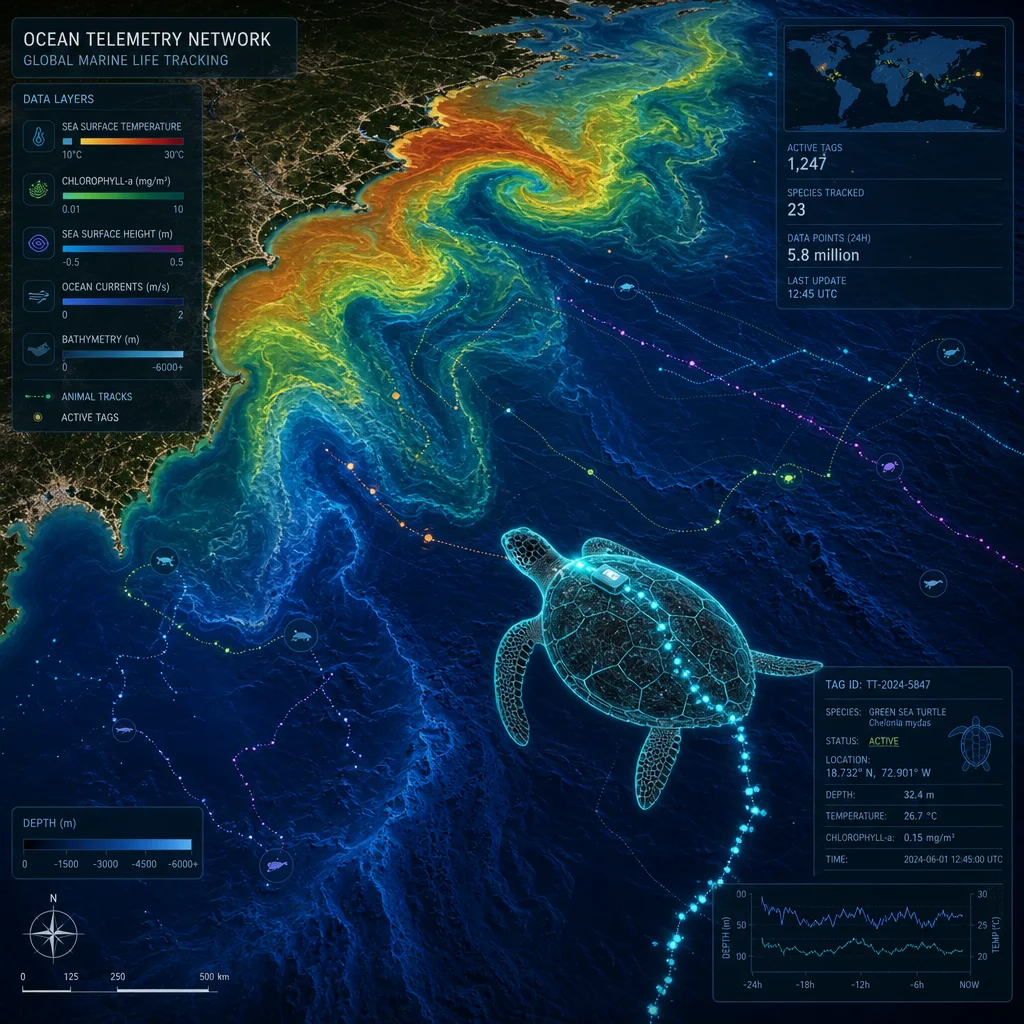
The contemporary frontier of ocean symbolism is wildlife conservation, which deploys the oldest cognitive tools available. Modern conservation campaigns assign endangered animals individual names, complex biographies, and mapped migratory journeys. Satellite-tracked whales feature in public tracking apps that read like epic literature. Rehabilitated sea turtles receive widely broadcast release videos that elicit deeper emotional investments than statistical scientific reports. This is real-time myth-making engineered to cultivate empathy.
While effective, this approach has systemic blind spots. Charismatic megafauna disproportionately siphon financial resources, leaving unglamorous, foundational species neglected. A vast seagrass meadow lacks an expressive facial structure, despite sheltering higher biodiversity than famous coral reefs. The central challenge for the coming decade is transferring the symbolic capital of the whale or turtle to the overlooked, faceless biomes of the marine biosphere.
Ocean wildlife holds semiotic power because human survival and imagination demanded it. The whale instilled humility, the dolphin offered hope, the shark enforced caution, and the turtle demonstrated patience. Modern visual culture preserves these lessons, sometimes responsibly and sometimes commercially. The critical skill is not memorizing zoological typologies, but interrogating authorship—discerning who constructs the narrative and what capital they extract from it.
When a commercial enterprise emblazons a cetacean onto a consumer product, analyze its rhetorical function. When cinema reduces a shark to an indiscriminate antagonist, calculate the ecological cost inflicted upon the living animal. When an artist etches a turtle shell pattern, investigate its indigenous roots. Symbols are compressed arguments, and the marine world has been composing those arguments since human consciousness began. Mastering their grammar is simply another method of paying attention to an oceanic planet we still comprehend primarily through stories.
“