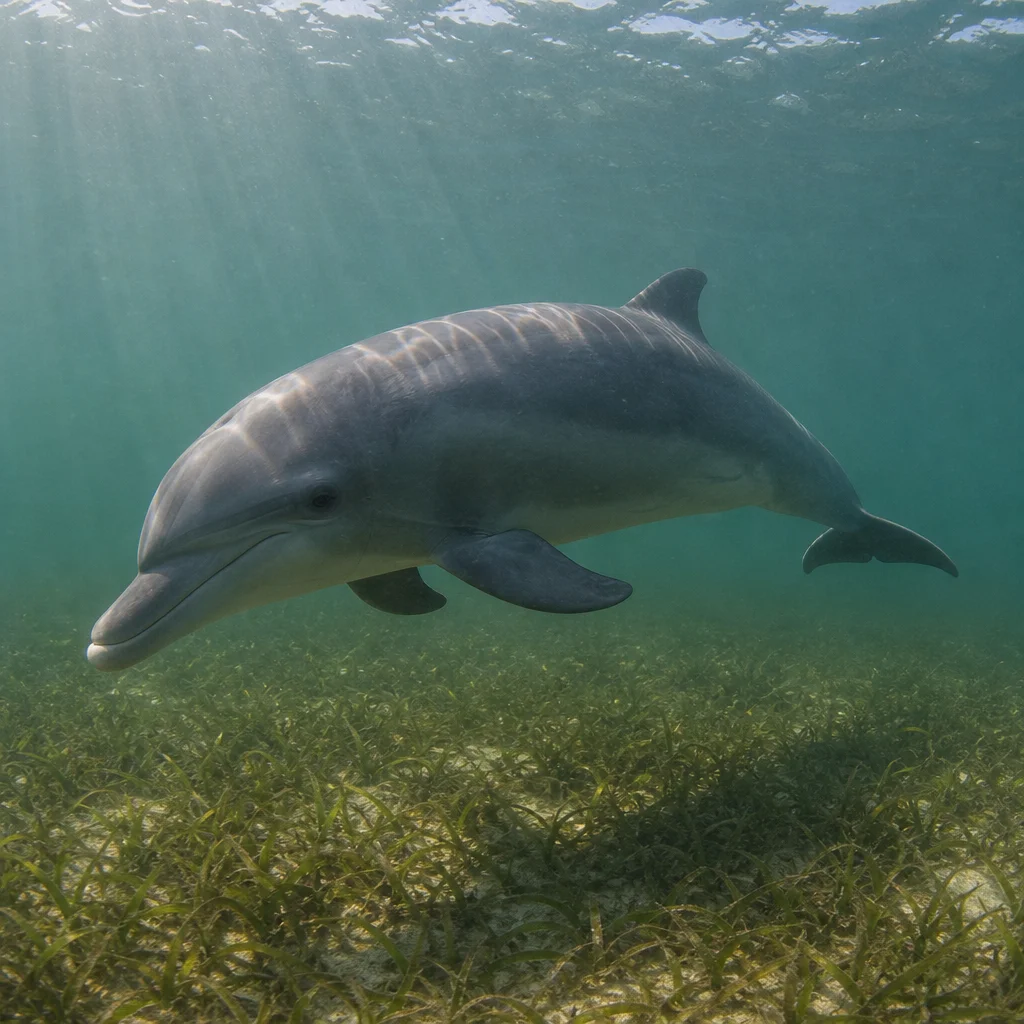
Coastal dolphins in the Atlantic live at the dynamic meeting point of land and open ocean—a narrow, shallow ribbon of water that fluctuates faster than almost any other marine habitat on Earth. Bottlenose dolphins (Tursiops truncatus), Atlantic white-sided dolphins, and harbour porpoises all rely heavily on this coastal zone for feeding, socializing, calving, and safe travel. Consequently, every microscopic shift in water chemistry, ambient temperature, or human-driven activity registers directly in their daily struggle for survival. Dissecting which environmental pressures matter most is far from an academic pursuit; it provides marine biologists, conservation managers, and coastal policymakers with a vital diagnostic lens to understand why certain resident populations thrive while others quietly decline.
Why Coastal Waters Are Exquisitely Sensitive
A dolphin hunting in the deep pelagic ocean navigates a relatively stable, buffered environment. Conversely, a coastal cetacean exists in a relentless state of flux. Rivers continuously dump massive volumes of fresh water, sediment, and terrestrial debris into estuaries. Twice daily, tidal currents push high-salinity water and nutrients back and forth. Severe coastal storms churn the seabed, reducing visibility to zero for weeks at a time. While coastal dolphins have evolved robust physiological mechanisms to cope with this natural variability, their ecological resilience has finite limits. When anthropogenic stressors pile on top of these baseline natural swings, the marine ecosystem’s margin for error collapses rapidly.
Compounding this vulnerability is the fact that many coastal populations are genetically distinct and semi-isolated. A resident community of fifty animals inside a sheltered bay or lagoon rarely mixes with neighboring pods. If local environmental conditions degrade severely, there is no massive offshore reservoir of animals ready to replenish the lost numbers. This structural isolation explains why localized environmental stress—which might barely register in a wide-ranging, migratory oceanic species—can decimate a localized coastal group within a few generations.
Water Temperature and the Biological Clock of Life
Water temperature dictates almost every facet of a dolphin’s metabolic life. It governs where pelagic prey gathers, dictates the seasonal window for calving, and dictates the energetic cost an animal must pay to maintain core body temperature. Throughout the western and eastern Atlantic, sea surface temperatures have exhibited a steady upward trend, though warming rates vary wildly across geography. Shallow bays, salt marshes, and semi-enclosed lagoons absorb solar radiation rapidly, warming far faster than adjacent open ocean waters.
Rising temperatures force many staple prey species, such as menhaden and mullet, to migrate poleward or seek deeper, cooler thermal refuges. Dolphins patrolling shallow coastal nurseries suddenly find their preferred forage fish sparse and patchy. Nursing females absorb the heaviest toll during these shifts, as their high metabolic demands leave them unable to travel vast distances in erratic pursuit of scarce food. The ultimate outcome is rarely immediate adult mortality; instead, it manifests as depressed calf survival rates—a stealthy, cascading drain on population numbers that easily slips past short-term census surveys.
Furthermore, thermal anomalies scramble the timing of mammalian reproduction. Calving is evolutionarily synchronized so that newborns arrive precisely when seasonal food availability peaks. If that biological peak shifts by even a few weeks due to unseasonal warmth, the resulting trophic mismatch can starve a calf during its critical first months of life. Long-term photo-identification and behavioral databases maintained across Atlantic research stations have documented these emerging temporal disruptions, confirming that climate shifts are actively rewriting reproductive success.
Salinity Shock, Storm Runoff, and Habitat Disruption
While dolphins handle moderate fluctuations in salinity, extreme osmotic shocks push their physiology to the brink. Torrential rainfall events and catastrophic river flooding can drop estuarine salinity near zero within a span of 48 hours. Conversely, prolonged droughts and restricted freshwater input push salinity levels dangerously high through extreme evaporation. Both extremes damage epidermal layers, irritate sensitive ocular membranes, and disrupt the delicate internal osmoregulation dolphins must maintain to survive.
Extreme weather events add compounding layers of destruction. High-intensity hurricanes and severe coastal low-pressure systems scour the sea floor, bury delicate seagrass meadows under feet of silt, and flush urban and agricultural pollutants straight into marine nurseries. In the aftermath of a major storm, coastal waters frequently suffer from hypoxia—dangerously low dissolved oxygen levels—alongside heavy chemical loads. Dolphins rarely flee the region entirely, but they are persistently displaced, burning vital lipid reserves and fragmenting complex social alliances.
The Invisible Threat of Land-Based Contaminants
Everything sprayed onto inland agricultural fields, washed down industrial drains, or discarded improperly eventually finds an aquatic pathway to the sea. Nutrient-laden agricultural runoff and poorly treated municipal wastewater trigger massive, toxic algal blooms that suffocate marine life as they decompose. Simultaneously, synthetic industrial contaminants—including persistent organic pollutants (POPs), flame retardants, polychlorinated biphenyls (PCBs), and heavy metals—bioaccumulate within the thick blubber layer of coastal cetaceans over decades.
Because dolphins occupy the absolute apex of the marine food web and enjoy lifespans stretching thirty to forty years, they function as tragic, living bio-accumulators of coastal pollution. High systemic contaminant loads directly impair immune system function, cause profound reproductive failure, and elevate susceptibility to novel bacterial and viral infections. Nursing calves ingest a massive, concentrated dose of lipophilic toxins through their mother’s milk during their initial months of life—precisely when their immunological defenses are still forming. While marine plastics capture human attention through dramatic imagery of entanglement, chronic chemical exposure remains the far more insidious, systemic threat to population viability.
Acoustic Pollution and the Heavy Cost of Noise
Dolphins live in a sensory world governed by sound. They use echolocation to navigate complex shallow channels, locate evasive prey, and maintain social cohesion through signature whistles. Unfortunately, the Atlantic coastal zone is simultaneously the loudest aquatic highway on Earth. Commercial shipping lanes, high-speed ferries, industrial dredging operations, recreational powerboats, and personal watercraft flood shallow marine habitats with persistent low- and mid-frequency engine noise. This cacophony directly masks the acoustic signals dolphins rely on for foraging and communication.
The biological impacts of acoustic masking range from behavioral avoidance to physiological exhaustion. Animals frequently abandon pristine feeding grounds due to chronic engine hum, alter established travel corridors, or shout at unnaturally high amplitudes just to be heard over vessel traffic—a process that burns excess caloric energy. For mothers rearing dependent calves, repeated foraging interruptions translate directly into malnutrition. Implementing mandatory vessel slowdowns, establishing strict speed restriction zones, and rerouting commercial traffic away from critical calving habitats are among the few management interventions that yield immediate, measurable reductions in acoustic stress.
Prey Depletion and Trophic Cascades
A dolphin’s entire behavioral ecology revolves around caloric intake. Coastal species frequently target schooling fish that are simultaneously heavily exploited by commercial and recreational fisheries, such as Atlantic herring, Spanish mackerel, and menhaden. When these fish stocks collapse due to overfishing or climate-driven habitat shifts, dolphins are forced to expend significantly more energy searching for smaller, less nutritious prey. Desperate animals often learn to depredate fishing nets and lines, exposing them to catastrophic risks of gear entanglement and lethal interactions with fishers.
Foraging success is fundamentally tied to structural habitat integrity. Seagrass meadows, salt marshes, mangrove fringes, and oyster reefs provide essential nurseries for the small invertebrates and juvenile fish that support higher trophic predators. When these foundational habitats are dredged, filled, or smothered by land-based sediment, the entire local food web collapses from the bottom up. Preserving and restoring physical coastal habitat is routinely more effective at sustaining dolphin numbers than regulating direct interactions with the animals themselves.
Notably, Atlantic coastal habitat destruction rarely occurs through a single cataclysmic event. Instead, it accumulates via death by a thousand cuts: a new marina here, a concrete seawall there, a deepened navigation channel that permanently alters local sand transport and current vectors. Each individual project appears negligible in isolation. Combined over decades, however, they systematically transform a biologically rich, protective bay into an industrial marine desert.
Harmful Algal Blooms and Emerging Diseases
Warmer, nutrient-polluted coastal waters create a fertile breeding ground for harmful algal blooms (HABs), often referred to as red tides. Certain dinoflagellate species produce potent neurotoxins, such as brevetoxins, which bioaccumulate as they move up the marine food chain. Dolphins feeding on contaminated fish suffer acute neurological damage, often resulting in mass stranding events documented across the Atlantic seaboard. Climate projections indicate that warming waters and intensifying agricultural runoff will make these toxic blooms both larger and more frequent.
Emerging infectious diseases represent another growing crisis. Small, isolated coastal populations suffering from chronic chemical immunosuppression are uniquely vulnerable to novel pathogens, including morbillivirus outbreaks that rip through dense social pods. When compounded by sustained habitat degradation and nutritional stress, infectious disease ceases to be a natural regulator and becomes an existential threat to population persistence.
How Marine Scientists Track Environmental Change
Unraveling the health dynamics of Atlantic dolphin populations requires meticulous, long-term monitoring across multiple scientific disciplines:
- Long-term photo-identification catalogues that track known individual dolphins across decades of life history.
- Minimally invasive skin and blubber biopsies that quantify systemic contaminant loads, stable isotopes, and chronic stress hormone levels.
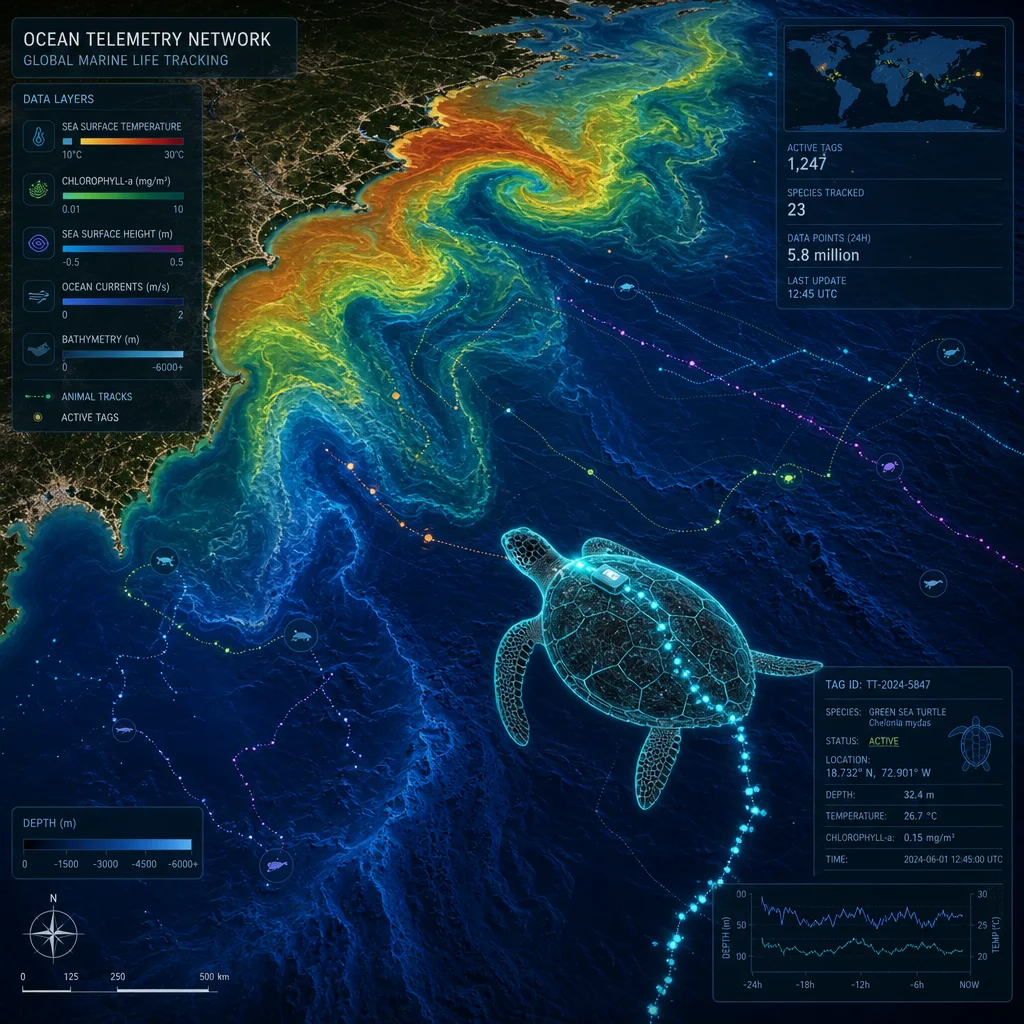
- Autonomous underwater acoustic recorders deployed to map ambient noise budgets and seasonal habitat occupancy patterns.
- Systematic aerial and vessel-based transect surveys designed to evaluate population density, spatial distribution, and mother-calf ratios.
- Trophic and prey sampling programs that link dolphin physiological condition directly to local fish stock fluctuations.
No single methodology tells the whole story. A skin biopsy reveals internal chemical exposure, an aerial survey pinpoints spatial distribution, and a hydrophone logs acoustic disturbance. Synthesized across multi-decadal timelines, these comprehensive datasets finally explain why a resident dolphin population thrives in one estuary while stagnating in another located just a hundred kilometers away.
Synthesizing the Ecological Big Picture
No single environmental variable dictates the trajectory of a coastal dolphin population. Temperature shifts, chemical runoff, persistent acoustic noise, prey availability, and infectious disease interact dynamically, creating cumulative impacts that far exceed the sum of their individual parts. A dolphin pod already stressed by heavy PCB accumulation will handle a sudden food shortage or viral outbreak far worse than a pristine, healthy population. This interconnectedness forms the defining challenge of modern marine conservation: environmental pressures arrive simultaneously, demanding holistic management rather than single-issue fixes.
Simultaneously, there is substantial room for ecological optimism. Coastal water quality responds rapidly to active mitigation; numerous Atlantic regions have recorded measurable ecosystem rebounds following upgraded municipal wastewater treatment plants and stricter industrial discharge controls. Enforcing vessel speed limits, designating marine protected areas for prey foraging, and strictly curbing agricultural nutrient runoff during major storm cycles yield concrete conservation benefits. Sustained, long-term scientific monitoring programs remain our most powerful tool, capturing the subtle, long-term ecological shifts that a single snapshot in time would entirely miss.
Conclusion
Coastal dolphins are remarkably resilient, adaptable marine mammals, but they remain inextricably bound to a narrow, highly contested strip of ocean heavily utilized by human society. Their physiological health serves as a direct, biological readout of how responsibly we manage that aquatic frontier. By evaluating water temperature, terrestrial runoff, chemical contamination, acoustic pollution, and prey stocks as an interconnected web rather than isolated issues, we secure the clearest vision of what lies ahead—and what actions we must take today to preserve the future of Atlantic coastal dolphins.