Why Coastal Wildlife Needs Local Eyes
Coastlines rank among the most ecologically dynamic and heavily threatened habitats on Earth. Twice daily, tides reshape shorelines, winds sculpt shifting dunes, and estuaries function as vital nurseries for migratory marine species traversing thousands of miles. However, these exact strips of land draw millions of human visitors, intensifying constant pressures on nesting shorebirds, endangered sea turtles, resting marine mammals, and fragile shellfish beds. Professional conservation biologists and state wildlife officers cannot maintain a constant physical presence across every mile of vulnerable coastline. That logistical reality explains why community-based citizen science has evolved into a formidable pillar of modern coastal conservation. When trained local residents, university students, and dedicated beachgoers execute systematic environmental observations on predictable schedules, they forge a permanent record no isolated research team could construct alone: an uninterrupted, hyperlocal archive documenting how coastal wildlife adapts to severe storms, rising water temperatures, unchecked shoreline development, and fluctuating human recreation.
What Citizen Science Really Means on the Shore
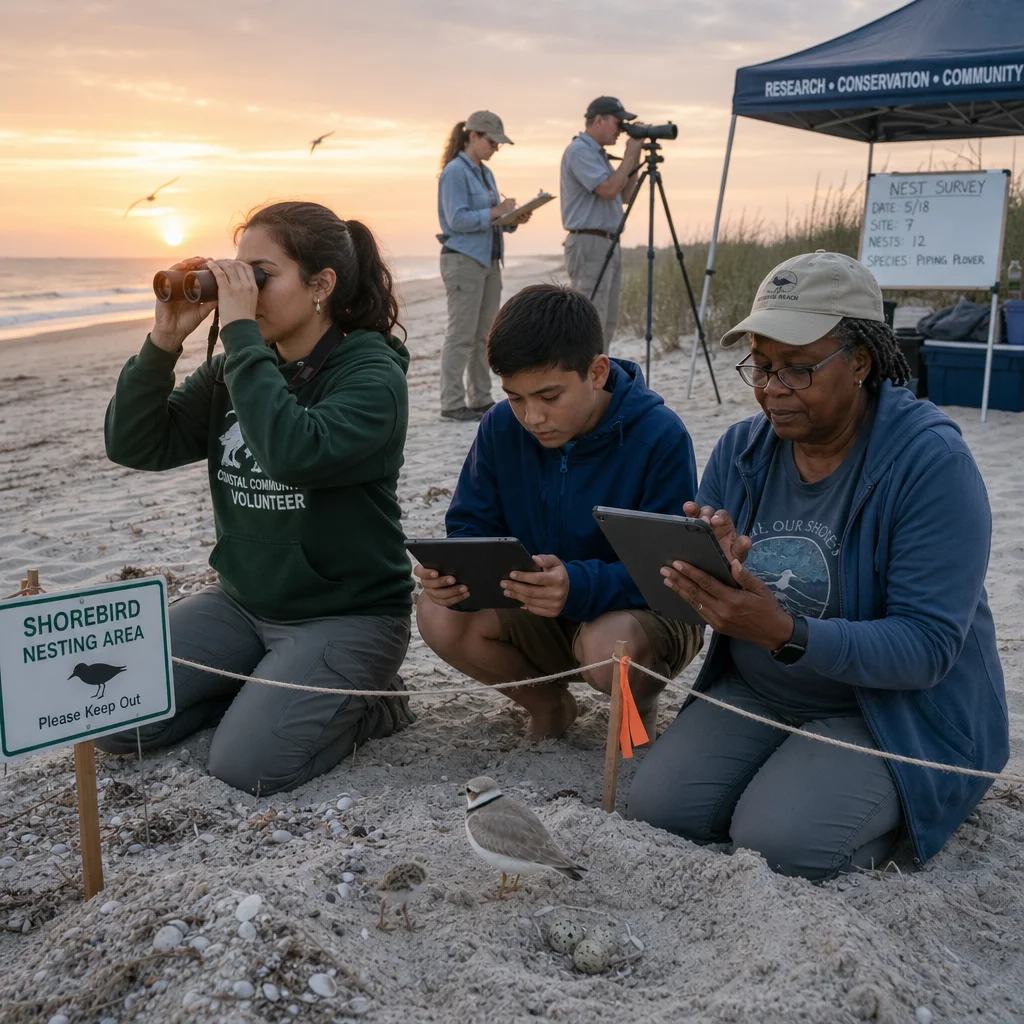
Citizen science transcends casual hobbyist participation; within professional coastal wildlife protection programs, it serves as the primary engine for continuous ecological data collection. Volunteers execute crucial tasks: counting nesting pairs, documenting sea turtle crawls at dawn, mapping marine mammal haul-out zones from safe distances, gathering water samples to detect harmful algal blooms, logging marine debris composition, and reporting distressed or stranded animals. Top-tier programs treat these localized observations with the same rigor applied to academic instruments—standardized, repeatable, and securely archived. The critical distinction between an ordinary beach stroll and an invaluable scientific dataset lies entirely in established protocols. A census that follows a designated route at a specified tide phase, logged in a uniform format, yields comparative metrics against data collected across a hundred adjacent beaches or over the past decade. A casual smartphone snapshot lacks this necessary context.
The Surveys That Anchor Coastal Programs
High-impact coastal citizen science initiatives typically concentrate on several well-validated survey methodologies:
- Breeding bird surveys track nest sites, fledgling survival rates, and human-induced disturbance events across beaches and dunes.
- Sea turtle monitoring patrols document nocturnal crawls, clutch locations, and successful hatchling emergences during peak nesting seasons.
- Marine mammal censuses record seasonal haul-out population sizes, pup production, and behavioral responses to watercraft or beachgoers.
- Shoreline debris audits categorize accumulated litter by material composition and primary source to inform municipal cleanup policies.
- Water quality sampling initiatives flag nutrient spikes, turbidity anomalies, and pathogen concentrations following severe weather events.
- Intertidal biodiversity transects monitor populations of bivalves, crabs, macroalgae, and microhabitats over extended temporal scales.
Every structured survey addresses a distinct management objective. Selecting the appropriate methodology yields significantly greater conservation value than accumulating massive volumes of unfocused, non-standardized data.
Protocols and Training: Why Rigor Matters
Good intentions quickly dissolve when confronted with unstructured, disorganized datasets. Successful conservation programs allocate substantial resources into comprehensive training seminars, clear written protocols, and routine quality assurance checks. Volunteers master species identification, distance estimation techniques, tide timing mechanics, and the strict ethics of wildlife observation. Many organizations implement mandatory field certifications, paired mentorship surveys during initial shifts, and periodic photo identification quizzes to maintain observational accuracy. Data validation is equally critical; program coordinators rigorously review all incoming submissions for statistical outliers, duplicated logs, and spatial inaccuracies before integration into master databases. This validation layer transforms grassroots observations into credible datasets utilized in peer-reviewed journals and official municipal habitat management plans. Far from acting as a barrier to public involvement, scientific rigor is the precise reason public involvement commands respect.
Technology as a Force Multiplier
Modern mobile technology has fundamentally revolutionized coastal fieldwork. Specialized applications featuring built-in digital forms, precise GPS coordinates, and offline caching enable volunteers to log standardized observations in seconds. Advanced photo-matching algorithms assist in tracking individual seals, dolphins, and cetaceans across multiple seasons without physical tags. Unmanned aerial vehicles (drones) provide safe aerial perspectives of remote haul-outs and nesting colonies without disturbing animals on foot. Furthermore, environmental DNA (eDNA) sampling allows community groups to detect rare, cryptic, or invasive aquatic species simply by filtering standard seawater samples. Centralized digital dashboards transform scattered local logs into dynamic heatmaps that municipal managers can interpret instantly. While technology never replaces rigorous human training, it successfully bridges the operational gap between a volunteer walking a dune and a decision-maker drafting conservation policy.
From Data to Decisions
Raw environmental data protects wildlife only when it effectively reaches resource managers and policy makers. Successful citizen science programs establish explicit communication pathways: quarterly analytical reports delivered to local councils, seasonal briefings for park superintendents, and public web dashboards accessible to the entire community. Documented volunteer records have successfully catalyzed seasonal beach closures during shorebird nesting windows, modified municipal dog-access regulations on fragile dune systems, redirected commercial dredging schedules to protect fish nurseries, and secured critical grant funding for coastal habitat restoration. The most persuasive advocacy couples empirical citizen datasets with precise management requests. For instance, a concrete statement noting that “volunteers recorded 42 distinct wildlife disturbance events at this colony last season, primarily driven by unleashed dogs” generates far more administrative action than generalized anxieties about declining bird populations.
Building Trust Between Scientists and Volunteers
Collaborative conservation initiatives inevitably falter when professional researchers treat local participants as unpaid labor while volunteers feel relegated to anonymous data entry clerks. Healthy, enduring programs prioritize open communication, formally credit individual contributors in published reports, and transparently demonstrate how collected observations directly influence management outcomes. Professional scientists gain invaluable localized insights that no short academic field season can capture—such as which tidal creek floods first during king tides, exact historical routes utilized by river otters, or precisely when local fishing fleets alter their gear configurations. Conversely, volunteers gain a deeper appreciation of the underlying ecological science, sustaining motivation through slow winter months. Routine feedback loops, open field debriefs, and community appreciation events accomplish far more for volunteer retention than aggressive recruitment campaigns ever could.
Keeping Volunteers Safe and Wildlife Undisturbed
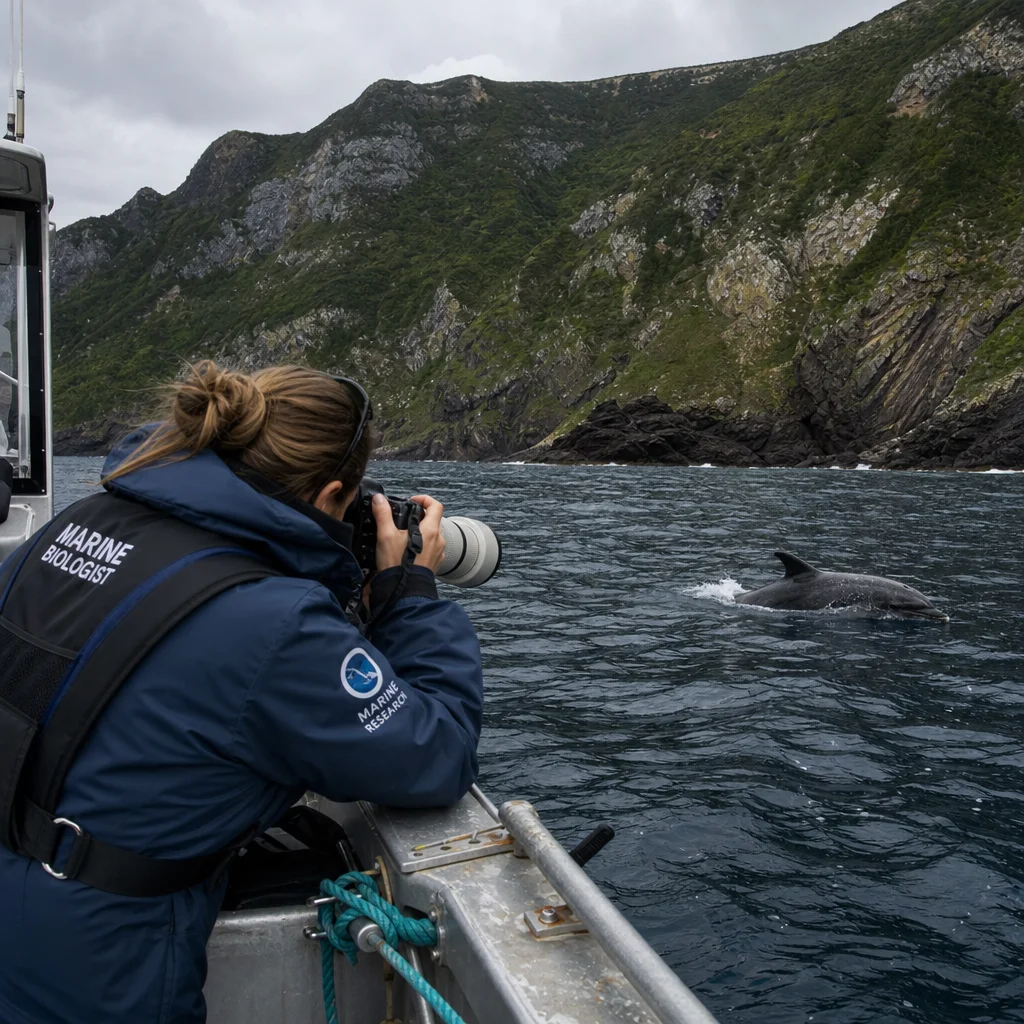
Coastal fieldwork inherently involves physical hazards: rapidly rising tides that cut off escape routes, slippery intertidal rocks, extreme heat, cold water immersion, and unstable coastal bluffs. Conservation programs must mandate strict safety measures, including buddy systems, current tide table checks, check-in protocols, and unequivocal stop-work rules when weather deteriorates. Wildlife welfare remains equally paramount. Observers must maintain lawful distances, utilize high-powered binoculars and telephoto lenses rather than approaching animals, refrain from handling marine life without explicit agency authorization, and strictly prohibit flash photography near active nests. Ground-nesting birds and resting pinnipeds expend critical metabolic energy when flushed from resting sites, and a single careless human intrusion can permanently disrupt an entire breeding season. Proper training establishes an uncompromising ethical boundary: the biological well-being of the animal always supersedes the desire for a photograph or data point.
The Social Side of Citizen Science
The broader socioeconomic benefits of community-based monitoring extend far beyond raw ecological datasets. Active volunteers naturally evolve into informal community ambassadors who educate neighbors, tourists, and beach visitors regarding coastal conservation rules and habitat sensitivity. Local schools adopt stretches of shoreline, integrating real-world scientific monitoring into standard biology curricula. Local businesses increasingly support conservation programs because pristine beaches and thriving wildlife directly sustain regional tourism economies. Long-running citizen science initiatives establish a unique form of community memory, preserving decades of continuous ecological observations that no transient, short-term research grant could possibly fund. In communities where historic environmental regulations felt like external impositions, locally driven monitoring fundamentally shifts the cultural narrative from restrictive top-down mandates to empowered local stewardship.
Common Pitfalls and How to Avoid Them
Numerous promising conservation programs fail prematurely due to predictable organizational missteps. Overly complex data protocols exhaust volunteers, triggering high attrition rates. Poor communication regarding data utilization leaves participants feeling exploited. Funding structures that cover field equipment while ignoring coordination expenses invariably result in chaotic, unusable datasets. Seasonal data gaps produce skewed ecological trends. The operational remedies are unglamorous yet highly effective: initiate operations on a small scale by piloting a single survey type on one accessible beach, meticulously document all procedures, celebrate milestone completions, and secure a dedicated, compensated program coordinator prior to scaling geographically. Programs designed explicitly to accommodate volunteer turnover and foster emerging local leaders consistently outlast initiatives built around a single charismatic founder.
Getting Started Where You Live
Contributing to coastal conservation requires no advanced degree in marine biology. Prospective participants can begin by contacting local municipal wildlife agencies, university marine laboratories, public aquariums, or coastal conservation nonprofits to identify pressing local data gaps. Volunteers should commit to mastering a single survey protocol for a full seasonal cycle rather than attempting to sample every available habitat indiscriminately. It is vital to learn local flora and fauna well enough to reliably identify common species while recognizing anomalies. Documenting environmental conditions with the same precision as wildlife sightings provides essential context for raw observations. Finally, maintain patience: coastal ecosystems respond slowly to management interventions, and a volunteer’s most profound contribution is returning year after year with unwavering methodology and enduring scientific curiosity.
A Model Worth Scaling
Community-based citizen science succeeds because its operational scale directly matches the decentralized scale of coastal environmental challenges. Effective wildlife protection depends on thousands of daily micro-decisions made by residents and visitors alike—such as where to walk on a dune, where to allow a pet to roam, where to drop a boat anchor, and where to permit shoreline construction. Citizens actively engaged in data collection naturally alter these daily behaviors through heightened environmental awareness. As coastlines confront accelerating sea-level rise, warming oceanic waters, and intensifying recreational pressures, initiatives that successfully integrate rigorous scientific protocols, transparent communication, and long-term community commitment will continue generating the indispensable empirical evidence upon which coastal protection depends.
“