Cetacean skeletons are among the most striking assets a natural history institution can hold, yet they are notoriously demanding to process. A stranded whale or dolphin arrives at the lab as a complex assembly of bone, blubber, dense connective tissue, and trapped gases. Every methodological choice made during the critical first forty-eight hours directly dictates whether the specimen will remain structurally stable for decades of anatomical research or degrade into an oily, fractured hazard. The workflow detailed below outlines established best practices in university collections and museum preparation labs, steering specimens systematically from legal acquisition through cleaning, meticulous degreasing, and climate-controlled curation.
Why cetacean bone behaves differently
Unlike terrestrial mammal bones, whale and dolphin skeletal elements are exceptionally dense, highly vascular, and saturated with lipids throughout life. The skeleton of a large baleen whale can weigh several hundred kilograms and may retain liters of oil deep within its trabecular matrix. This lipid content is the primary enemy of long-term preservation. If left untreated, the fats migrate to the surface over time, oxidize, darken the bone to a deep amber, and eventually degrade into a rancid, sticky residue that attracts dust and destructive dermestid pests. Furthermore, cetacean bones—particularly the skull, ribs, and flipper phalanges—feature delicate, thin-walled structures that shatter or warp under aggressive handling. Recognizing these material constraints before making a single cut is essential for preserving both the specimen’s scientific integrity and the institution’s budget.
Legal and ethical groundwork
Virtually every jurisdiction strictly regulates the possession, transfer, and transport of cetacean material under national wildlife conservation laws and international frameworks like CITES. Before initiating any physical preparation, curation staff must verify that the animal was acquired lawfully, that comprehensive permits cover both preparation and long-term housing, and that the facility is legally registered to possess marine mammal parts. Stranding networks, environmental protection authorities, and customs agencies must be consulted immediately, never retrospectively. Ethical protocols dictate that museum specimens originate from natural strandings rather than intentional takes, and all context must be recorded. Maintaining a secure dossier containing permit numbers, official stranding reports, and a strict chain of custody safeguards the institution throughout the lifespan of the collection.
Recovery and field documentation
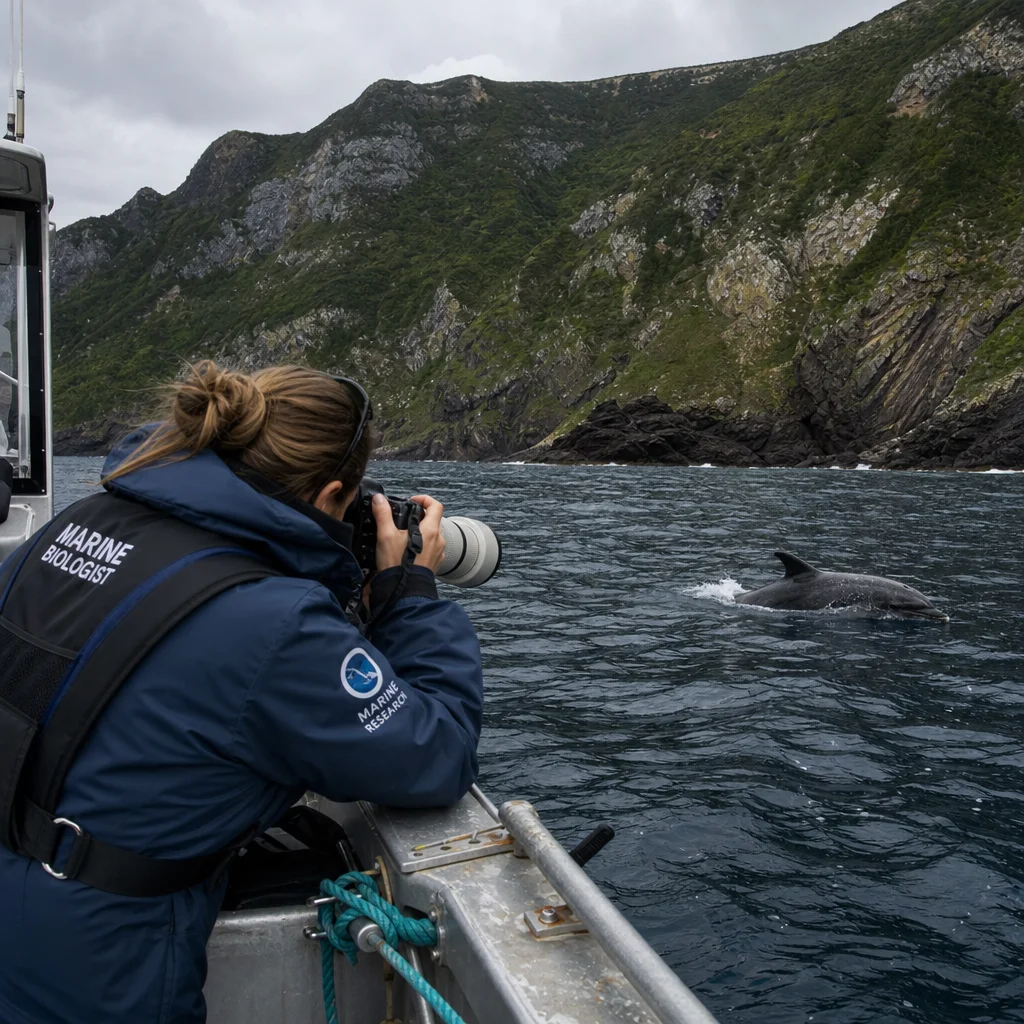
Critical data is most frequently lost during field recovery. Before moving a carcass, researchers must photograph it comprehensively from all anatomical angles, record precise GPS coordinates, note the recovery date, verify species identification, estimate total length, and document any visible pathologies, trauma, or net marks. Labeling every single skeletal element upon removal is mandatory, especially tiny carpals, tarsals, phalanges, and the delicate hyoid apparatus that vanish easily in sediment. Because flensing an adult baleen whale on-site is rarely feasible, many institutions bury the carcass in a permeable, well-drained sandy matrix, allowing natural bacterial decomposition for one to three years before recovering the clean elements. While burial is cost-effective, it can impart permanent iron or mineral stains and is disastrous in acidic clay or waterlogged anaerobic mud. Regardless of the extraction technique, exhaustive field notes must be kept, as future morphometricians rely on knowing the exact post-mortem history of the bone.
Choosing a cleaning method
No universal cleaning protocol exists; techniques must be tailored to the taxon, size, and condition of the specimen. Controlled warm-water maceration is the gold standard for academic collections, offering maximum control and pristine results, though it requires heated tanks and continuous odor management. Dermestid beetle colonies work exceptionally well for small dolphins and porpoises but fail on large, lipid-saturated whale bones and require rigorous colony quarantine. Chemical methods utilizing enzymatic detergents can accelerate tissue breakdown but risk etching or degrading delicate bone surfaces if concentrations are miscalculated. Open-air burial and cold-water immersion are inexpensive but slow, often trapping residual organic compounds deep within the Haversian systems. For research-grade collections, controlled maceration coupled with exhaustive solvent degreasing remains the safest methodology.
Maceration in practice
Maceration relies on heterotrophic bacteria to break down remaining soft tissues. These bacteria require regulated warmth, water, and a consistent oxygen supply to thrive. The maceration tank must be large enough for all bones to float or rest without mechanical crowding. Maintain water temperatures strictly between thirty and thirty-five degrees Celsius, exchanging a portion of the volume bi-weekly to prevent toxic metabolite buildup. Open-air tanks are vital; sealed vessels foster anaerobic conditions that produce foul odors and generate bone-etching organic acids. Skulls should be elevated or angled to allow trapped fluids to drain freely from the braincase, sinuses, and nasal passages. Once tissue is removed, rinse every element in fresh water and gently brush away residual cartilage with soft nylon tools. Never expose cetacean bone to boiling water, as extreme heat instantly denatures residual collagen, causing catastrophic cracking, warping, and permanent structural failure.

Degreasing is not optional
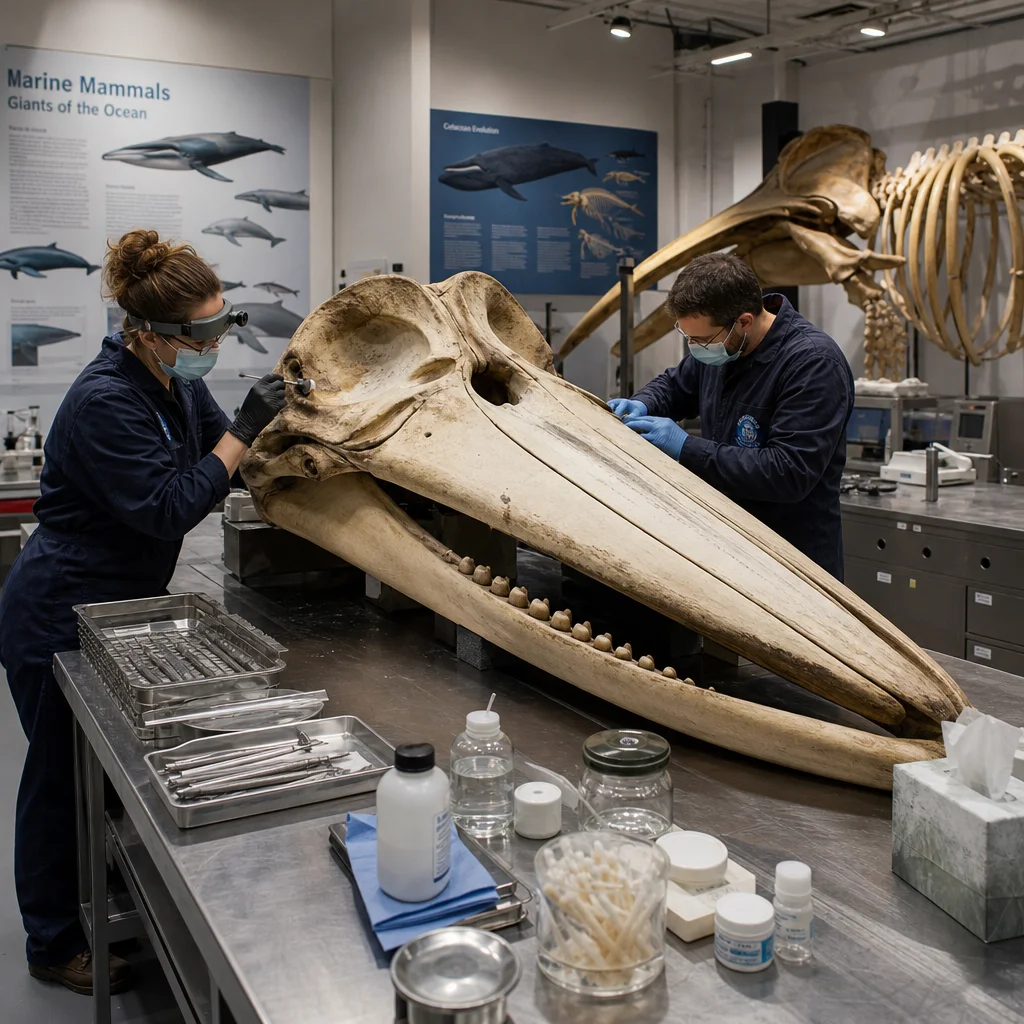
Degreasing is invariably the longest phase of preparation and the one most frequently rushed by underfunded labs. Submerge cleaned, dry bones in an organic solvent bath—typically industrial-grade acetone or specialized petroleum-based degreasers—and replace the solvent as soon as it turns opaque. Large whale elements require months of continuous soaking. To test completeness, extract a dense bone element, allow it to dry fully, and examine it against a strong light source; a dark, translucent oily halo indicates that lipids remain trapped inside. Elevated ambient temperatures accelerate extraction, but strict fire safety protocols and vapor extraction systems are mandatory. While smaller elements fit into sealed glass jars, massive mysticete skulls require custom-built stainless-steel tanks equipped with recirculating solvent pumps.
Whitening, consolidation and surface care
Post-degreasing, bones naturally appear a healthy ivory or pale tan rather than stark white, and bleaching is rarely necessary or recommended. If cosmetic whitening is requested for display, apply a weak solution of hydrogen peroxide for strictly controlled, short intervals, followed by thorough neutralizing rinses. Never use domestic chlorine bleach, as sodium hypochlorite aggressively breaks down the hydroxyapatite mineral matrix, leaving bones chalky, brittle, and structurally compromised. Fragile elements, such as thin orbital plates or porous juvenile vertebrae, benefit from consolidation using a fully reversible low-molecular-weight acrylic resin applied sparingly. Reversibility is the absolute rule of conservation: any chemical or consolidant introduced today must be safely removable by future researchers without harming the original biological substrate.
Reconstruction and articulation
Articulating a complete cetacean skeleton demands an internal armature that supports immense weight without imparting localized stress points. Curators must rely on accurate baseline anatomical charts detailing the exact articulation of each vertebra and rib, while preparators need mechanical flexibility during assembly. Modern museum mounts typically utilize internal stainless-steel armatures clad in chemically inert polyethylene foam and fabric, paired with custom-molded cradles supporting the massive skull and spinal column. Ribs should attach via secure, removable mechanical clamps rather than permanent adhesives, permitting individual elements to be detached for detailed measurement. Comprehensive engineering diagrams, junction photographs, and hardware specifications must be permanently filed in the specimen archive.
Storage and environmental control
Long-term environmental stability dictates the ultimate lifespan of prepared osteological collections. Maintain exhibition and storage vaults at a relative humidity between forty and fifty-five percent, with stable temperatures hovering between eighteen and twenty degrees Celsius and minimal diurnal fluctuation. Attic and basement locations prone to extreme temperature swings or water leaks must be strictly avoided. Because bone is inherently hygroscopic, cyclic humidity shifts cause continuous volumetric expansion and contraction, generating microscopic stress fractures over time. Store massive elements on padded, weight-distributed shelving units or custom carts, ensuring they are never stacked directly on top of one another. Small appendicular bones belong in acid-free, labeled compartmentalized trays lined with inert Ethafoam. Integrated pest management using sticky insect traps and scheduled physical inspections ensures infestations are caught before damage occurs.
Documentation and digital records
An osteological specimen devoid of associated metadata is merely a curiosity devoid of scientific value. Curators must log comprehensive data: species, sex, age cohort, precise geographic coordinates of collection, date of acquisition, preparator identification, complete treatment logs, and any pathological anomalies observed. Photographic documentation must cover pre-preparation, active treatment, and final state, including macro shots of dentition and skeletal trauma. Modern facilities increasingly utilize high-resolution 3D surface scanning to generate digital models of fragile or oversized skulls, minimizing physical handling of original material. Digital archives should be duplicated across redundant off-site servers and cross-referenced with physical accession ledgers, enabling global morphometric comparative studies.
Health and safety in the preparation lab
Processing marine mammal remains exposes laboratory personnel to significant occupational hazards. Stranded carcasses frequently harbor zoonotic pathogens, and aerosolized mists rising from warm maceration tanks present severe respiratory risks. Preparation spaces require negative-pressure ventilation, seamless non-porous chemical-resistant flooring, and strict personal protective equipment protocols including heavy nitrile gloves, chemical splash goggles, and N95 or P100 respirators during aerosol-generating tasks. Heavy bone fragments and massive skulls present severe crushing hazards, necessitating motorized hoists, hydraulic gantries, and rigorous lifting plans. Solvents demand explosion-proof storage cabinets and compliant hazardous waste disposal channels. A dynamic, written risk assessment updated for every new species or size class is non-negotiable for institutional safety.
Special considerations for large whales
Processing large baleen whale skeletons requires logistical infrastructure far exceeding standard osteological prep. A single thoracic vertebra can easily exceed human lifting capacity, and an adult mysticete skull frequently surpasses two meters in length. Before committing institutional resources to full skeletal recovery, directors must evaluate whether the facility possesses adequate floor-loading capacity, door clearances, and crane access. Many university museums strategically retain only the skull, mandibles, selected vertebrae, and a pectoral limb rather than the entire post-cranial skeleton, drastically reducing storage overhead while retaining ninety percent of research utility. When a complete exhibition mount is mandated, engineering budgets must accommodate professional riggers, custom-welded structural steel, and reinforced architectural flooring. Partial preservation reflects prudent resource management, not curation failure.
Common mistakes and final thoughts
The most pervasive errors in cetacean curation are entirely avoidable: omitting the degreasing phase, applying household bleach, boiling bones in water, using permanent structural adhesives, and failing to maintain preparation logs. Each shortcut saves days in the lab at the direct expense of decades of research utility. Cetacean specimens are irreplaceable, legally protected, and exceptionally costly to acquire, making patience the most critical tool in the conservator’s kit. A meticulously prepared skeleton, paired with transparent documentation and a stable microclimate, transforms from a stranded mortality into a vital educational asset, a baseline for evolutionary morphometrics, and a tangible ambassador for marine conservation for well over a century.