Estuaries occupy a dynamic and critical position in our global geography. They are neither fully freshwater rivers nor open marine seas, but restless, shifting hybrids where freshwater meets saltwater and the tide pushes upstream twice a day. This transition zone supports some of the most biologically productive ecosystems on Earth, and its contribution to global marine biodiversity is vastly disproportionate to its modest geographical footprint. From the temperate mudflats of Northern Europe to the intricate mangrove creeks of the tropics, estuarine habitats function as indispensable nurseries, organic filters, rich feeding grounds, and vital migration corridors for thousands of marine and avian species. Understanding how these intricate systems operate, and why they remain deeply vulnerable, is essential for anyone invested in the long-term health of our oceans.
Where Rivers Meet the Sea: The Science of Mixing
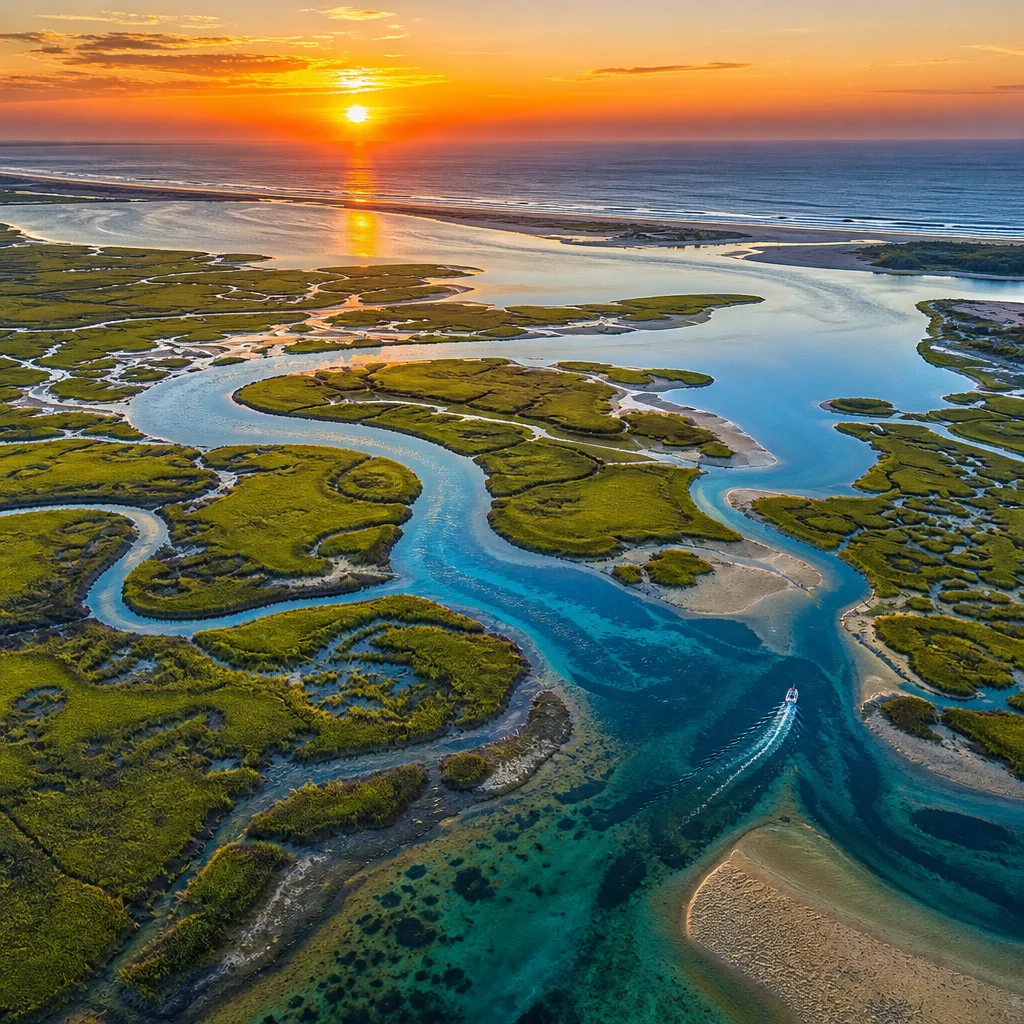
An estuary is a partially enclosed coastal body of water where freshwater streams and rivers mix with saltwater from the open ocean. This chemical and physical mixture is rarely uniform. Salinity shifts dynamically with the lunar tide, water depth, distance from the sea, and seasonal rainfall fluctuations, creating a shifting mosaic of environmental conditions that can alter entirely within hours. Estuarine waters are frequently turbid, carrying heavy loads of suspended sediment, dissolved nutrients, and decaying organic matter from terrestrial watersheds downstream.
While murky water might seem unappealing to recreational swimmers, it is actually the hallmark of a healthy, functioning metabolic system: the estuary is actively transporting, processing, and cycling material rather than passively storing it. Estuaries take many distinct geomorphological forms, including drowned river valleys, coastal lagoons, fjords, bar-built systems sheltered behind sand spits, and tectonic basins. Each configuration possesses a unique geometry and mixing rhythm, hosting a specialized community of organisms. Yet they all share a vital ecological gradient—a continuous transition from freshwater to marine salinity, fine silt to coarse sand, and sheltered banks to exposed shores. These sharp environmental gradients create ecotones, and ecotones generate extraordinary biological richness.
A Indispensable Nursery for Ocean Life
Perhaps the single most critical function of estuarine ecosystems is their role as nursery habitats for the open ocean. A staggering percentage of marine species that spend their adult lives in deep waters, pelagic zones, or offshore coral reefs begin their vulnerable early lives in the calm, shallow waters of an estuary. Gravid fish and crustaceans migrate into these protected areas to spawn, knowing their offspring will find the specific conditions needed for survival: elevated water temperatures that accelerate metabolic growth, abundant food supplies in the form of rich zooplankton and benthic invertebrates, and complex structural cover among submerged roots, stems, and oyster shells that conceals them from hungry predators.
Species relying heavily on estuarine nurseries include commercially vital fisheries targets such as striped bass, Atlantic menhaden, flounders, and grey mullet, alongside blue crabs, white shrimp, and numerous bivalves. Juvenile sharks and rays routinely utilize shallow estuarine flats as safe pupping grounds. Even species typically regarded as entirely oceanic, such as certain groupers and snappers, show a measurable, profound dependence on coastal wetlands during their early life stages. When these structural habitats are degraded or destroyed, the negative ecological feedback is not localized; it propagates outward, depleting offshore fisheries, crashing coastal food webs, and impacting seabirds, marine mammals, and apex predators.
This nursery engine depends on an exceptionally delicate physical arrangement. Juvenile marine animals require unhindered physical access to the estuary, meaning barrier-free connections to the open sea. They require high water quality, demanding strict management of upstream industrial pollution and agricultural sediment loads. Crucially, they require intact vegetation architecture—healthy salt marshes, dense seagrass meadows, and sprawling mangrove root systems. Strip away any single component, and the nursery capacity collapses, even if the water itself appears temporarily clear and calm.
Nutrient Engines and High Primary Production
Estuaries rank among the most productive ecosystems per square meter on the planet, rivaling tropical rainforests and barrier coral reefs. This high productivity is fueled by a relentless, upward supply of terrestrial nutrients, combined with shallow bathymetry that permits sunlight to penetrate the water column, and powerful tidal currents that recycle organic material between bottom sediments and surface waters. Salt marsh cordgrasses, eelgrasses, red mangroves, benthic macroalgae, and microscopic phytoplankton all drive this biological output, each occupying a distinct ecological niche.
Primary production within estuaries is channeled into marine food webs through multiple pathways. While some living plant matter is grazed directly by herbivorous fish and invertebrates, a vast proportion dies, breaks down into nutrient-rich detritus, and fuels a massive decomposer food web powered by marine bacteria, fungi, and detritivores. This detrital pathway is central to estuarine stability: it converts tough plant matter that few animals can digest directly into rich microbial biomass and fine organic particles consumed by worms, crabs, shrimp, and filter-feeding bivalves. This concentrated energy then moves upward through the trophic pyramid to sustain wading birds, predatory fish, and marine mammals.
Furthermore, estuaries export immense amounts of this biological production out to sea. Tides and coastal currents flush particulate organic matter, planktonic larvae, and small organisms into adjacent coastal waters, effectively subsidizing offshore marine food webs. Protecting an estuary therefore safeguards far more than the immediate shoreline; it maintains the ecological foundation of the broader continental shelf.
Nature’s Advanced Water Filtration System
As water drains from terrestrial watersheds through an estuary, its velocity drops significantly. Dense coastal vegetation, intricate mudflat networks, and shallow winding channels work together to reduce current speed, allowing suspended sediments and particle-bound pollutants to settle safely out of the water column. Concurrently, massive resident populations of eastern oysters, blue mussels, and other filter feeders process staggering volumes of water daily, extracting suspended solids and absorbing excess nitrogen and phosphorus directly into their tissues.
Simultaneously, salt marshes trap heavy sediment loads and absorb massive amounts of nutrients, while specialized microbes in the anoxic sediment layers convert toxic nitrates into harmless nitrogen gas through complete denitrification. Together, these natural processes dramatically improve water clarity, suppress harmful algal blooms, and protect delicate nearshore marine environments. This natural filtration service carries immense economic value: cleaner water reduces public health risks, supports thriving recreational tourism, and sustains light-dependent seagrass beds that require high water transparency to thrive. When coastal wetlands are drained, dredged, or replaced with concrete seawalls, this free filtration infrastructure is permanently lost, forcing municipalities to invest heavily in expensive mechanical water treatment plants.
Habitat Mosaics That Amplify Biodiversity
Biological diversity thrives on structural heterogeneity, and estuaries are natural masters of variety. A single square kilometer of a healthy estuary may contain intertidal mudflats, sandy shallows, rocky outcrops, sprawling salt marshes, dense seagrass meadows, mangrove forests, living oyster reefs, and deep open-water channels. Each micro-habitat hosts a distinct, highly specialized assemblage of species. Intertidal mudflats support burrowing polychaete worms, soft-shell clams, and migratory shorebirds that probe the sediment for food. Seagrass meadows shelter pipefish, seahorses, and juvenile finfish.
Oyster reefs establish complex, three-dimensional hard substrates that function much like temperate coral reefs. Mangrove roots provide critical vertical architecture in tropical zones, while rigid salt marsh stems perform a comparable role in colder temperate climates. This complex habitat mosaic creates rich ecotones—boundary zones where distinct communities overlap and where evolutionary specialists find unique ecological niches. Consequently, the cumulative biodiversity of an estuary vastly exceeds the sum of its isolated parts. It is an intricate landscape of physical and chemical interfaces, and these interfaces are where biological interactions are most intense and productive.
Corridors for Diadromous and Migratory Species
Estuaries serve as indispensable ecological gateways between inland freshwater river basins and the open ocean. Diadromous fish—species that must migrate between freshwater and marine environments during their life cycles—depend on estuaries absolutely for their survival. Atlantic salmon, Pacific salmon, sturgeon, American eels, river herring, and shad all pass through estuarine waters during their cyclical migrations. For these species, the estuary functions as an essential physiological transition zone, allowing their bodies to gradually adjust to drastic shifts in osmotic pressure and salinity.
Constructing physical barriers or degrading water quality within an estuary can sever these ancient migratory routes completely, causing population collapses for fish species that spawn hundreds of kilometers inland. Additionally, estuaries act as vital stopover feeding stations for millions of migratory birds along major international flyways. Hundreds of thousands of shorebirds, ducks, geese, and gulls rely on estuarine tidal flats to refuel during epic seasonal migrations. The precise biological timing of their arrival often coincides precisely with seasonal peaks in benthic invertebrate abundance—an evolutionary synchrony that can be catastrophically disrupted by habitat destruction or altered freshwater management upstream.
Natural Buffers Against a Changing Climate
Coastal wetlands possess an extraordinary capacity to sequester and store atmospheric carbon within their deep, anaerobic sediments at rates frequently exceeding those of terrestrial tropical rainforests. Salt marshes, mangrove forests, and seagrass meadows accumulate organic carbon over centuries and millennia, locking it away in thick, carbon-rich soils commonly referred to as blue carbon. Preserving and restoring these critical coastal habitats keeps massive quantities of carbon safely locked in the ground, preventing significant greenhouse gas emissions that would otherwise occur if these soils were drained, excavated, or exposed to oxidation.
Beyond carbon sequestration, estuaries provide vital natural protection against extreme weather and sea-level rise. Vegetated shorelines, barrier islands, and wide intertidal mudflats effectively dissipate incoming wave energy, substantially reducing the destructive height of storm surges before they reach inland infrastructure. During severe inland flooding events, expansive estuarine floodplains and marshes act as natural sponges, absorbing, storing, and slowly releasing floodwaters. As global sea levels rise and severe weather events increase in frequency and intensity, these natural coastal buffers become profoundly valuable, making ecological restoration far more durable and cost-effective than building rigid, hard engineering defenses like seawalls.
Intense Anthropogenic Pressures on Estuaries
Despite their undeniable ecological and economic value, estuaries remain among the most heavily altered and threatened ecosystems on planet Earth. Rapid coastal urbanization, land reclamation projects, commercial port expansions, industrial dredging, and intensive coastal aquaculture have destroyed or severely degraded vast historical areas of salt marsh, mangrove forest, and seagrass meadow. Upstream construction of massive hydroelectric dams and large-scale water withdrawals fundamentally alter natural freshwater flows and sediment delivery schedules, leaving some estuaries hypersaline while starving others of the vital mineral sediments they desperately need to vertically accrete and keep pace with rising sea levels.
Furthermore, chronic nutrient pollution from intensive industrial agriculture and municipal wastewater treatment triggers widespread eutrophication, catastrophic oxygen depletion, and massive seasonal fish kills. Persistent plastic debris and synthetic microfibers accumulate in the exact quiet depositional corners where vulnerable fish larvae and invertebrates seek biological refuge. Anthropogenic climate change compounds every single one of these baseline pressures: warming water temperatures shift species geographic ranges and disrupt delicate reproductive cycles, more intense precipitation events deliver massive, concentrated pulses of contaminated runoff, and rising seas push salt tongues further upstream, disrupting the finely tuned salinity gradients upon which countless estuarine species depend.
Restoration and Collaborative Stewardship
The encouraging reality is that estuarine ecosystems possess remarkable resilience and respond exceptionally well to targeted ecological restoration. Removing obsolete upstream dams, restoring tidal flushing to historically drained agricultural marshes, replanting devastated seagrass meadows, rebuilding degraded oyster reefs, and establishing wide vegetative buffer strips along agricultural waterways consistently yield measurable ecological recovery within years rather than centuries. Designating strict marine protected areas and implementing science-based commercial fishing quotas allow depleted wildlife populations to rebound successfully.
Effective estuarine restoration, however, is rarely a purely academic or technical exercise; it requires long-term financial investment, rigorous scientific monitoring, and the active, willing participation of local communities living and working around the estuary—including commercial fishers, farmers, port authorities, municipal leaders, local schools, and grassroots volunteer groups. Citizen science initiatives that track seasonal bird migrations, monitor water chemistry, and record fish catches generate invaluable large-scale ecological data while cultivating a deep local sense of environmental ownership that ensures long-term protection.
Why Estuaries Matter Beyond the Coastline
It is historically tempting to treat estuaries as marginal, transitional landscapes—and therefore secondary in conservation priority. The overwhelming ecological evidence points decisively in the opposite direction. These dynamic systems function as primary biological engines, vital water purification filters, robust natural storm buffers, and indispensable nurseries that sustain global ocean food webs and coastal economies. Marine biodiversity is not maintained solely in the deep pelagic ocean or on pristine tropical coral reefs; it is continually generated and renewed in the shallow, muddy, brackish waters where rivers finally end and the ocean begins.
Protecting and restoring estuarine ecosystems is therefore one of the most efficient, high-yield conservation investments available to modern society. It simultaneously supports commercial fisheries, enhances regional water quality, mitigates global climate change through blue carbon storage, and protects vulnerable coastal communities from extreme weather, all at once. The ultimate goal is no longer to preserve these landscapes in a pristine, untouched state, which is no longer realistic in the Anthropocene, but to maintain and restore their core ecological functions: keeping them actively connected to their freshwater rivers, fully open to the tidal sea, vegetated along their shores, and clean enough to serve as functional nurseries for the future. If we successfully manage this stewardship, our ocean’s rich biological diversity will continue to regenerate, generation after generation, in the quiet, productive meeting place between fresh water and salt.