Marine-themed interactive simulations place immense demands on their development and art teams. Water is simultaneously transparent, reflective, refracting, absorbing, and scattering, with every single property shifting dynamically according to depth, salinity, particulate turbidity, and time of day. A free-diver drifting past a sunlit coral shelf experiences an entirely different visual reality than a researcher descending into a pitch-black abyssal trench. Consequently, compelling underwater environments cannot be faked with a generic blue post-processing filter and a basic water shader. They require a rigorous, systemic approach to light propagation, spectral color attenuation, particulate volumetric scattering, silhouette legibility, and organic motion.
When these technical and artistic layers operate in absolute harmony, they convince the human brain that the virtual space is heavy, fluid, and breathing. Below, we break down the core engineering and design pillars required to achieve world-class graphic immersion in marine interactive environments, addressing every stage from initial color grading to diegetic UI integration.
Light Behavior and Spectral Attenuation in Water
Above the water line, sunlight arrives as a predominantly parallel, full-spectrum beam. Beneath the surface, water acts as an aggressive optical filter. Long wavelengths of light are absorbed first: red wavelengths vanish within the top ten meters of clear ocean water, followed rapidly by orange and yellow. By the time a camera or character reaches thirty meters depth, the visual spectrum collapses into a restricted, atmospheric blue-green monochromatic band.
Simulations that ignore this physical law—such as rendering a vividly crimson reef fish at forty meters depth—immediately trigger subconscious disbelief in the player. The most efficient industry solution is a depth-driven global color ramp rather than manual per-asset painting. A custom post-process volume dynamically shifts hue, saturation, and luminance as the virtual camera descends. Artists author assets using neutral, balanced albedo values, allowing the depth ramp to tint them accurately. At depth, a bright red wetsuit naturally shifts into a dull, desaturated brown-grey, perfectly mimicking real-world underwater optics.
Volumetric Scattering, Fog, and Spatial Depth Cues
Water is never an empty void tinted blue; it is a dense suspension of organic matter, micro-plankton, and mineral silt that scatters light in every direction. This particulate scattering causes distant geometry to soften and lose contrast exponentially long before it completely disappears. To replicate this, technical artists combine two essential rendering techniques: an exponential distance fog for broad-scale background falloff, and a directional scattering term that brightens the volumetric fog when the player looks toward the sun.
This directional component is critical. Without it, underwater fog appears as an uninspired, flat grey-blue wall. With it, majestic shafts of light slice through the water column, giving the environment tangible depth cues. These volumetric light shafts must be anchored to real-world geometry near the surface, correctly angled for the simulated time of day, and dynamically dimmed in murky, high-turbidity zones where god rays would be optically impossible.
Caustics: Tying the Seabed to the Surface
Caustics—the intricate, dancing web of focused light patterns playing across the seabed and submerged structures—serve as the single most powerful psychological indicator that a player is underwater. However, they are also among the most frequently abused graphic features. Over-saturated, hyper-contrasted caustics can quickly induce visual fatigue.
Top-tier implementations project animated caustic texture arrays downward from the water surface, masking them intelligently by depth and surface normals, and smoothly fading them out as the camera breaches the surface. Crucially, caustic behavior must correspond directly to the surface above. If the player observes gentle surface ripples, the seabed must reflect those exact gentle undulations rather than violent storm turbulence. Tying both systems to a shared wave parameter vector eliminates visual dissonance and simplifies asset tuning for technical artists.
| Depth Zone | Dominant Color Spectrum | Light Behavior & Scattering | Primary Immersion Focus |
|---|---|---|---|
| Surface Zone (0-10m) | Full spectrum, vibrant cyan, warm highlights | High direct sunlight, sharp caustics, minimal fog | Surface reflections, dynamic wave refractions |
| Twilight Zone (10-40m) | Cyan to deep blue, red wavelengths lost | Moderate exponential fog, directional light shafts | Silhouette readability, midtone contrast |
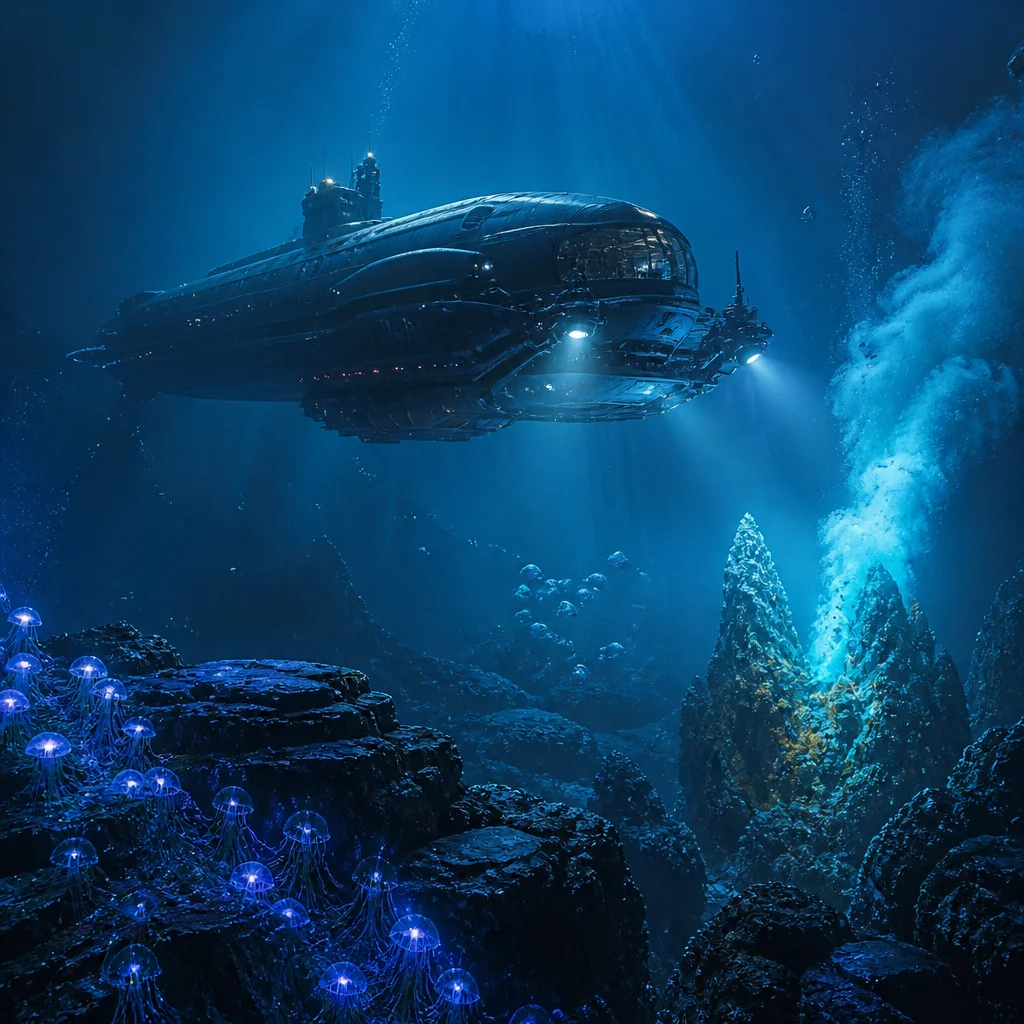
| Abyssal Zone (40m+) | Deep indigo, near-black monochrome | Bioluminescent focal points, heavy particulate scatter | Atmospheric tension, emissive accents |
Seamless Waterline Crossings and Boundary Transitions
The transition boundary between air and water is where many simulation projects fail technically. An abrupt hard cut, a jarring color space snap, or an instantaneous change in the field of view reads as an unpolished loading transition rather than an organic dive. Smooth, cinematic transitions require a blended orchestration of fog density parameters, color ramp blending curves, audio low-pass filtering, and custom camera inertia.
Even a carefully timed two-second transition featuring procedural water droplets cascading across the camera lens and a muffled acoustic profile does infinitely more for immersion than an expensive, unoptimized screen-space reflection system. Players distinctly remember the moment they breached or submerged; this sensory threshold deserves dedicated design attention.
Color Grading and Mastering the Deep Blue Palette
A common pitfall in marine art direction is an over-reliance on blue. Pushing blue saturation higher and higher in an attempt to make a scene feel “more aquatic” typically results in a muddy, monochrome image where characters, hazards, and interactive objects blend indistinguishably into the background.
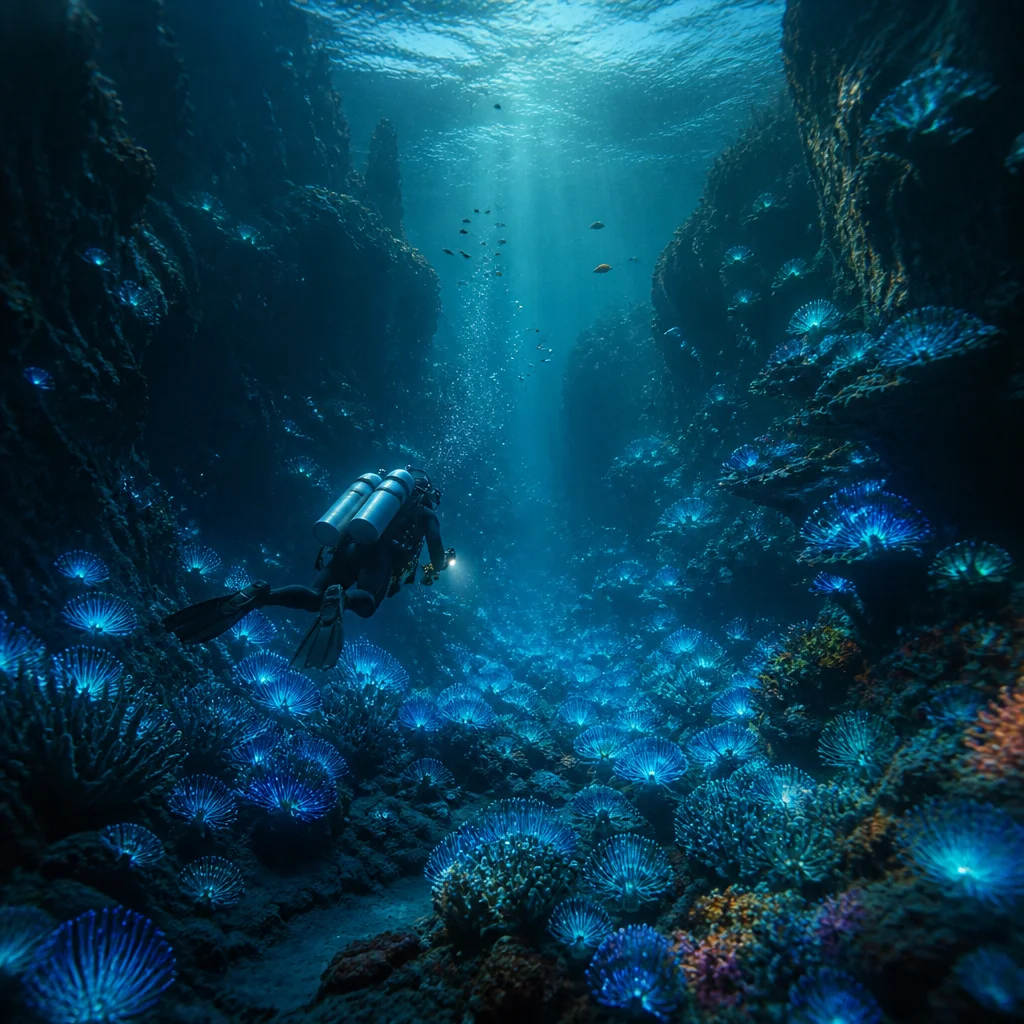
Advanced marine simulations borrow heavily from professional underwater cinematography: keep the global midtones cool and atmospheric, but strictly preserve warm chromatic accents as focal points. Bioluminescent organisms, a diver’s high-intensity handheld lamp, rusted iron hulls, or schools of golden pelagic fish act as essential visual anchors within a low-contrast field. Prioritizing local contrast over global saturation, alongside subtle shadow lifting, preserves scene readability on diverse consumer displays.
Silhouette-First Design for Low-Visibility Readability
Turbid, murky water is not merely an aesthetic choice—it is a core gameplay constraint. When visibility drops to minimal levels, if players cannot instantly identify threats, collectible resources, or structural exits, environmental tension instantly degrades into frustrating confusion. The proven design remedy is silhouette-first asset creation.
Every creature, prop, and navigational marker must be instantly recognizable as its intended archetype at ninety percent fog density based purely on its outline. A shark, for instance, must communicate its identity through its distinctive dorsal fin, tapering caudal structure, and blunt snout before any surface texture or color pattern is factored in. Early art pipeline testing should require rendering every major asset as a flat black silhouette against the background fog color. If it cannot be classified within one second, the 3D model requires structural rework.
Procedural Marine Life and Authentic Creature Animation
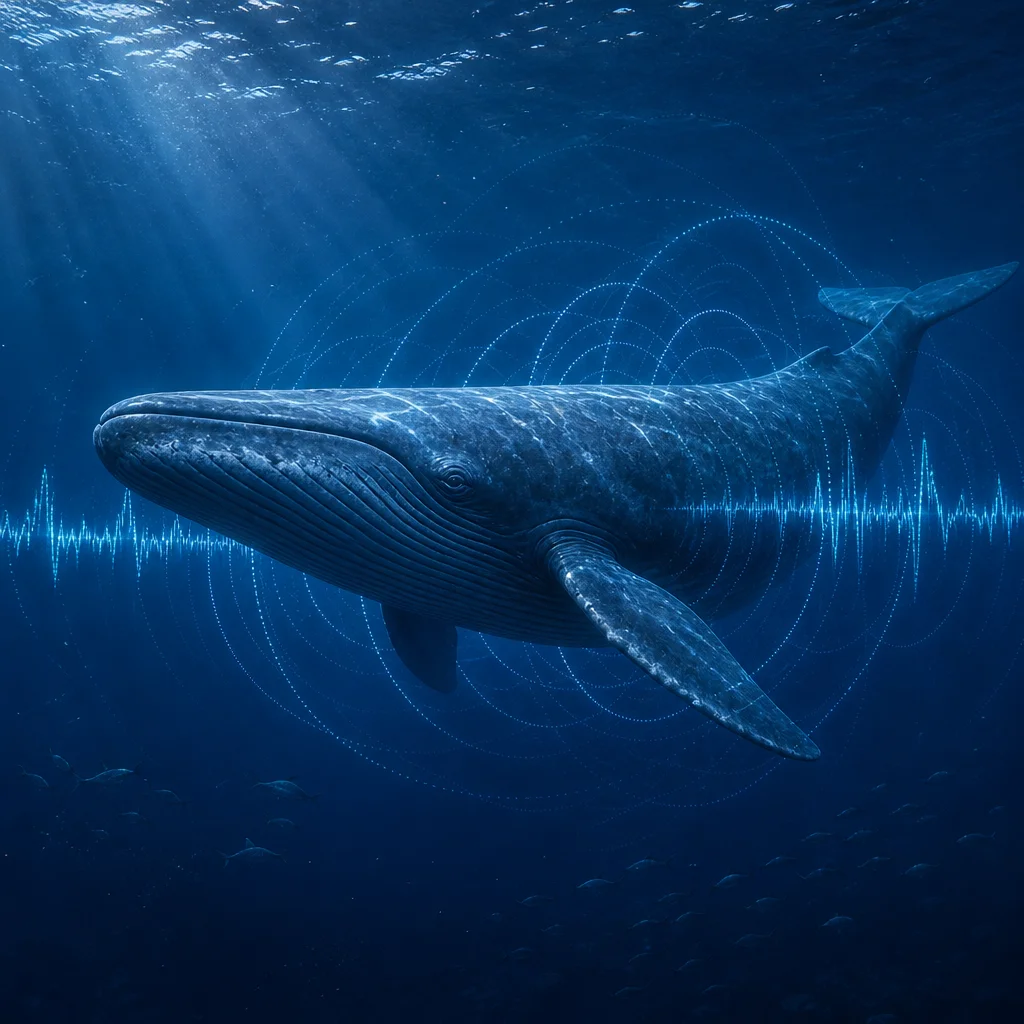
Marine ecosystems offer an incredible animation vocabulary because biological form follows hydrodynamic function with absolute precision. A pelagic predator built for high-speed cruising features a rigid, fusiform body; a reef specialist navigating tight coral mazes is laterally compressed and fin-heavy; deep-sea organisms are frequently gelatinous, translucent, and bioluminescent.
Applying these evolutionary rules consistently establishes a believable virtual biosphere. Animation mechanics follow identical physical logic. Fish propel themselves via lateral body undulation originating at the head and accelerating toward the tail. Cephalopods use jet propulsion and rhythmic drifting. Getting the phase, frequency, and amplitude of these waves mathematically correct is far more important than raw polygon counts, as human visual perception easily spots unnatural movement in living biological forms.
Diegetic Interface Design That Preserves the Frame
Simulations of this nature invariably require telemetry readouts: current depth, oxygen reserves, internal pressure, thermal status, and navigational waypoints. Floating flat floating HUD elements completely shatter graphic immersion. The most elegant, industry-standard solution is diegetic interface integration.
Displaying critical data directly on the character’s wrist-mounted dive computer, embedding sonar readouts into physical dashboard hardware, or utilizing a subtle diving mask overlay with gentle edge vignetting turns dry UI elements into tactile equipment. The golden rule of marine UI design is that no informational element should sit flat against the screen plane unless it represents a literal in-world surface.
Performance Optimization as an Artistic Constraint
Volumetric scattering fog, dynamic caustics, subsurface skin scattering, particle swarms, and complex water refraction compete fiercely for the exact same frame budget. Production teams that successfully ship polished marine simulations plan for this hardware bottleneck from inception. They establish tiered quality presets tied to specific rendering features, build robust LOD variants for particle systems, and avoid redundant full-screen render passes.
Establish a strict discipline: select the two visual pillars that define the project’s aesthetic identity—typically scattering fog and caustics—protect their GPU budget unconditionally, and ensure all secondary systems scale dynamically around them.
Accessibility in Low-Contrast Marine Environments
Underwater simulation environments are inherently challenging for players with visual impairments or specific forms of color deficiency. Standard blue-green palettes easily collapse for users with deuteranopia or protanopia, while atmospheric fog can hide critical interactive elements. Implementing dedicated accessibility features—such as a high-contrast readability mode, adjustable object outline toggles, color-blind-safe accent color palettes for UI markers, and independent motion sickness sliders for camera sway—ensures the simulation remains inclusive without compromising the core artistic vision when disabled by default.
Common Pitfalls to Avoid in Marine Simulation Design
- Applying dense environmental fog without directional sun scattering, resulting in a flat, lifeless backdrop.
- Manually painting warm color values at deep levels instead of utilizing a depth-driven global color ramp.
- Overusing god rays in highly turbid, silt-heavy water where physical light shafts cannot form.
- Designing complex creature assets that rely on close-range, crystal-clear water to be identified.
- Coupling caustic lighting animations and surface wave parameters to unrelated, uncoordinated math systems.
- Placing UI monitoring elements flat across the screen plane without justified in-world hardware context.
Conclusion
Graphic immersion in marine-themed interactive simulations is achieved through uncompromising internal consistency rather than isolated visual spectacles. Light propagation, spectral color absorption, fog density, silhouette design, and hydrodynamic motion must all corroborate the exact same environmental narrative regarding depth, water clarity, and time of day. When these complex design systems align seamlessly, a simulation built with modest technical horsepower can feel infinitely more authentic and alive than an expensive visual showcase whose internal rules contradict one another. The ultimate responsibility of the art and simulation team is not merely rendering water—it is rendering the profound, believable consequences of water.
“